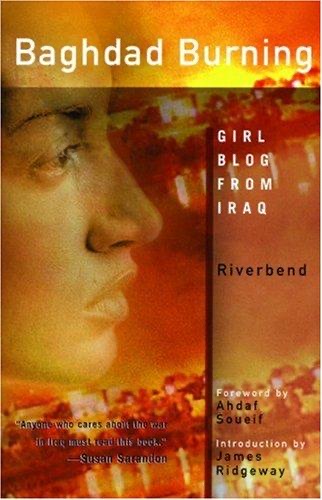
Cover of Baghdad Burning

Baghdad Burning

Riverbend

4 ideas

  1. Programmer pushed out of her workplace

    Before the invasion Riverbend worked as a computer programmer in a mixed-gender office. When she returned after the fall of Baghdad, a former colleague told her that women were no longer welcome because the company could not guarantee their safety. Her job, and her ability to move around the city without a male relative, disappeared without any law being passed.

  2. Insecurity erodes women's freedom faster than decrees

    Women's public lives shrink first through chaos rather than legislation: kidnappings, checkpoints and armed men make families keep daughters at home and push them to wear headscarves for protection. Rights secured under a secular state can vanish in practice once the state's monopoly on violence collapses, even while the occupying power claims to be spreading liberation.

  3. Bridge estimate versus the foreign contract

    Riverbend recounts a relative's Iraqi engineering firm estimating a small fraction of a foreign contractor's price to repair a damaged Baghdad bridge. The work went to the foreign contractor instead, while experienced Iraqi engineers sat idle. She uses the episode to show reconstruction money flowing to occupiers' firms, not to local capacity.

  4. Imposed sectarian quotas manufacture sectarian identity

    Riverbend, from a mixed Sunni-Shia family, argues that Iraqis of her circle rarely organized their lives around sect before the occupation. The occupation assigned Governing Council seats and political representation by sect and ethnicity, which rewarded people for defining themselves that way. An institutional design meant to reflect divisions ends up hardening them into the main axis of politics.

Save and mark ideas in the app