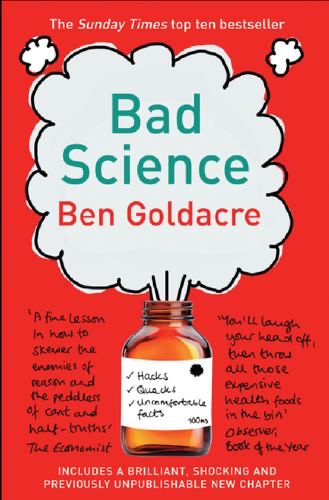
Cover of Bad Science

Bad Science

Ben Goldacre

6 ideas

  1. Placebo responses are shaped by treatment ritual

    The book presents studies in which placebo responses varied with the theatre around a treatment: four sugar pills outperformed two, injections outperformed pills, and branded pills outperformed plain ones. An intervention can therefore produce real subjective improvement even when its active ingredient contributes little or nothing. The book argues that a blinded comparison against placebo is the way to separate the ritual from the remedy.

  2. Fair test through randomization and blinding

    To know whether a treatment works, allocate patients to treatment or control at random. Conceal the allocation from the people recruiting patients, and blind both patients and assessors. Unrandomized or unblinded trials reliably overstate benefits, because clinicians steer healthier patients toward the treatment and hopeful observers see improvement where they expect it.

  3. Publication bias distorts the evidence base

    Trials with positive results are more likely to be published than trials with null or negative results, especially when sponsors control the data. Anyone who reads only the published literature therefore meets a systematically inflated picture of effectiveness. Funnel plots can reveal the missing studies, and mandatory trial registration is the structural fix.

  4. Relative risk hides absolute risk

    Framing a result as 'doubles your risk' sounds alarming even when the baseline risk moves from 1 in 10,000 to 2 in 10,000. Media and marketers choose relative figures because they are bigger. Stating results as natural frequencies, such as 'out of 100 people like you, how many more will be affected', makes risk intelligible.

  5. The MMR scare manufactured by media

    A small case series of 12 children, with no control group, was amplified by UK newspapers into a years-long campaign linking the MMR vaccine to autism. Coverage framed the question as a balanced 'debate' while the epidemiological evidence showed no link. Vaccination rates fell and measles returned. The episode shows how journalistic false balance can turn a weak anecdote into a public health harm.

  6. Nutritionism overreaches from lab to plate

    Nutrition entrepreneurs extrapolate from test-tube findings, animal studies, or observational correlations to confident claims that a specific food or supplement prevents disease. Large randomized trials often contradict these claims; antioxidant supplements, for example, showed no benefit and sometimes caused harm. Surrogate markers and mechanistic plausibility are not evidence of real-world health outcomes, and the reduction of lifestyle and socioeconomic causes to pills sold as cures is a commercial move, not a scientific one.

Save and mark ideas in the app