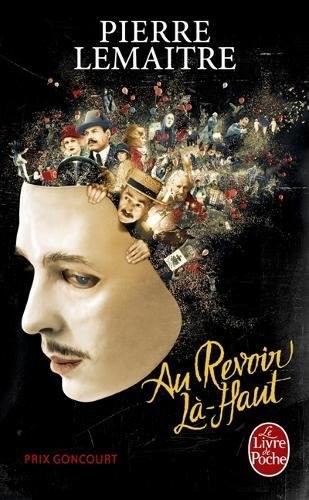
Cover of Au revoir là-haut

Au revoir là-haut

Pierre Lemaitre

3 ideas

  1. The catalogue scam for phantom war memorials

    In 1919–1920, Albert Maillard, a penniless ex-soldier, and Édouard Péricourt, a wealthy banker's son whose lower jaw was shot away and who has been declared dead under a swapped identity, print a glossy catalogue of patriotic war memorials designed by Édouard. They sell them by mail to French towns desperate to honour their dead, offering discounts for early deposits. They plan to vanish with the advance payments around 14 July 1920 without building a single monument.

  2. Pradelle's corrupt military cemetery reburial contract

    Henri d'Aulnay-Pradelle, the lieutenant who provoked a pointless final assault in November 1918 by shooting two of his own scouts, marries into the Péricourt fortune and wins state contracts to exhume and rebury fallen soldiers in national cemeteries. To maximise profit he supplies coffins too small for the bodies, mixes up remains, and fills some coffins with earth. A dour, unbribable low-level inspector, Joseph Merlin, documents the fraud and brings him down.

  3. The nation monetised its dead and discarded its survivors

    After 1918, grief and patriotism created a commemoration market of monuments, cemeteries and ceremonies with real money flowing through it. Meanwhile demobilised soldiers, especially the maimed, received meagre pensions, no jobs and public embarrassment. The dead were worth more to the state and to entrepreneurs than the living veterans were, and this made commemoration a site of profit and hypocrisy.

Save and mark ideas in the app