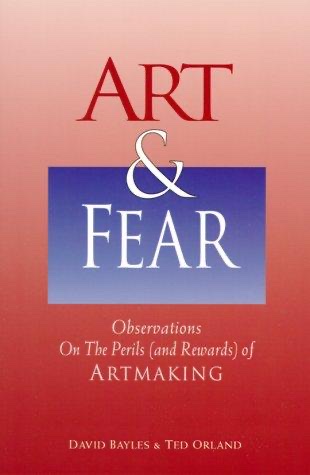
Cover of Art & Fear

Art & Fear

David Bayles and Ted Orland

5 ideas

  1. Ceramics class graded on quantity versus quality

    A ceramics teacher split his class: one half would be graded purely on the weight of pots produced, the other on a single best pot. The best work all came from the quantity group, because they kept making pots and learning from their mistakes, while the quality group sat theorizing about perfection and produced little besides grandiose ideas and a pile of dead clay.

  2. Artists quit by failing to restart

    Artists rarely quit dramatically; they quit when a piece ends and they don't begin the next one. Quitting is less a decision than a gap that goes unfilled, so the practical defense is to always have the next piece started, or known, before the current one is finished.

  3. Fears about yourself versus fears about reception

    The authors divide artistic fears into fears about yourself (pretending, lacking talent, having nothing worth saying, never achieving your vision) and fears about others' reactions (not being understood, accepted, or approved). In their account, fears about yourself get in the way of doing your best work, while fears about reception get in the way of doing your own work.

  4. Talent is a misleading explanation

    Treating talent as the prerequisite for art mistakes a head start for the destination, since whatever innate gift someone has only matters if they keep working. Believing art needs rare genius lets ordinary makers excuse quitting, when the real distinguishing trait of people who make good work is that they learned to continue.

  5. The gap between vision and execution

    Every piece begins as an imagined ideal that the materials, your skill, and chance inevitably fall short of. The disappointment of this gap is not a sign of failure but the normal condition of making, and the gap itself is where you learn what the work, and you, can actually do.

Save and mark ideas in the app