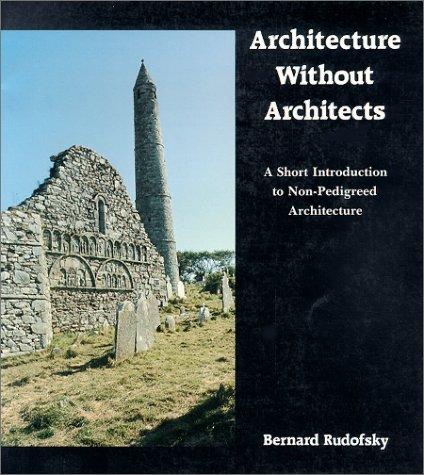
Cover of Architecture Without Architects

Architecture Without Architects

Bernard Rudofsky

6 ideas

  1. Architectural history is biased toward pedigree

    Standard architectural history covers only buildings made for power and privilege: temples, palaces, cathedrals, and works signed by named architects. Rudofsky argues this is a selection bias, not a judgment of quality. It leaves out most of what humans have actually built, and it teaches that architecture begins with the professional designer.

  2. Non-pedigreed architecture as a category

    Rudofsky names 'non-pedigreed' architecture: building that is vernacular, anonymous, spontaneous, indigenous, or rural. It is produced by communal activity drawing on shared heritage and experience, not by an individual author. Naming the category makes these structures available for aesthetic study rather than only ethnographic study.

  3. Vernacular forms transmitted across generations

    Rudofsky stresses that vernacular building forms are handed down across generations and remain nearly unchanged over long periods, fitted to local climate, materials, and ways of life. He presents this inherited continuity as a source of practical good sense and economy of means that he contrasts with the restlessness of modern professional design.

  4. Photographing humble buildings with aesthetic seriousness

    Rudofsky presents granaries, cave villages, and terraced slopes in black-and-white photographs, many drawn from imperfect archival sources, with explanatory captions. By showing these structures seriously as architecture, the book challenges the prejudice that dismisses them as primitive and invites readers to see their formal qualities.

  5. Excavated dwellings in underground settlements

    The book shows communities, such as those in Cappadocia and the loess regions of China, that made dwellings by carving into rock or digging into the earth rather than building up. Rudofsky notes that such excavated dwellings offer comfort across the seasons, showing that building can mean removing material rather than adding it.

  6. Landscape itself can be collective architecture

    Rudofsky treats terraced hillsides, fortified hill towns, and whole village clusters as single architectural works rather than as collections of separate buildings. When a community shapes land and buildings together over time, the unit of design becomes the settlement or the landscape. This undermines the idea that architecture is the individual building as an isolated object.

Save and mark ideas in the app