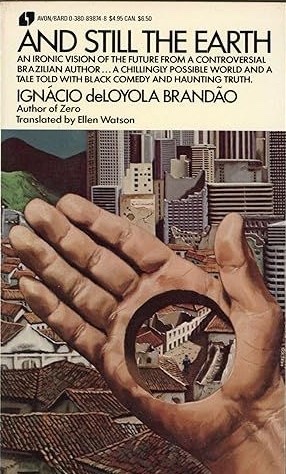
Cover of And Still the Earth

And Still the Earth

Ignácio de Loyola Brandão

3 ideas

  1. Souza's Descent Through Scorched São Paulo

    Souza, a former history professor pushed into a minor bureaucratic post by the authoritarian Civiltar regime, lives in a future São Paulo with no trees, rationed water and deadly heat. A wound appears in his hand and will not heal, his wife Adelaide disappears, and he is pushed out of his routine into streets full of the displaced and the dead. His slide from compliant functionary to homeless witness shows how much of a life under such a regime depends on staying inside its permitted grooves.

  2. Environmental Collapse Becomes Authoritarian Justification

    When a regime has caused or allowed ecological ruin, the resulting scarcity of water, shade and food gives it a new reason to govern. It rations, zones movement and polices access to basic survival. Scarcity turns control from a political choice into a supposed technical necessity, so the damage done by power becomes the argument for more power.

  3. Habit Sustains Acceptance of Decline

    People get through worsening degradation by adjusting their expectations step by step. They come to accept recycled water, synthetic food and heat that kills people in the street as part of ordinary life. Habit keeps most losses from provoking resistance, though scarcity can still break out into desperate acts such as the raid on the museum's preserved water.

Save and mark ideas in the app