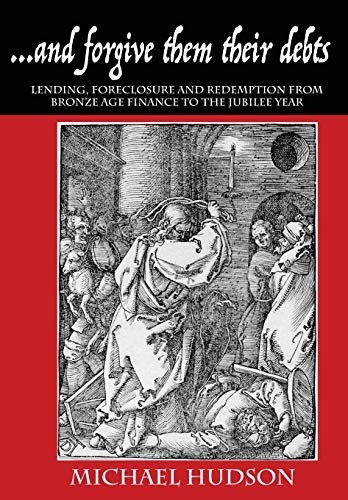
Cover of ...and forgive them their debts

...and forgive them their debts

Michael Hudson

6 ideas

  1. Debt compounds faster than economies grow

    Interest-bearing debt grows exponentially while the productive capacity to repay it grows slowly and linearly, so arrears inevitably outrun the ability to pay. Without periodic write-downs, debt mathematically ends up transferring land and labor from debtors to creditors.

  2. Clean slate proclamations as royal statecraft

    Mesopotamian rulers, typically on taking the throne or in times of crisis, decreed the cancellation of personal agrarian debts. They freed bondservants and returned forfeited land to its cultivators. These decrees, such as the Babylonian misharum and Sumerian amargi, were routine administrative acts, not utopian gestures.

  3. Rulers cancelled debts to preserve military and tax base

    The free peasantry supplied the corvée labor, army recruits, and taxes that the palace depended on. When debt bondage let private creditors absorb those peasants, royal power weakened. Debt amnesty therefore protected the state's own resource base against an emerging creditor oligarchy.

  4. Selective cancellation: personal debts only

    Clean slates cancelled consumer and agrarian barley debts owed to palaces, temples, and private lenders. Commercial silver debts among merchants were left intact. This distinction let rulers reset subsistence-driven bondage without destroying the trade credit that financed productive enterprise.

  5. Biblical Jubilee derives from Near Eastern practice

    The Jubilee year of Leviticus 25, with its release of debts, freeing of bondservants, and land restoration, adapts Mesopotamian royal amnesty practice. It turns a king's discretionary proclamation into a periodic law attributed to God. Placing the law outside any ruler's discretion made cancellation mandatory rather than something creditors could lobby against.

  6. Western history as creditor oligarchy's gradual victory

    In classical Greece and Rome, debt relief came from episodic reformers such as Greek tyrants, Solon, and Spartan kings rather than from a lasting royal tradition of clean slates, and where such overrides failed, creditor oligarchies concentrated land and reduced citizens to dependency. Seen this way, treating debt as sacrosanct is not a natural economic law but the political outcome of creditors gradually overcoming the institutions that once restrained them.

Save and mark ideas in the app