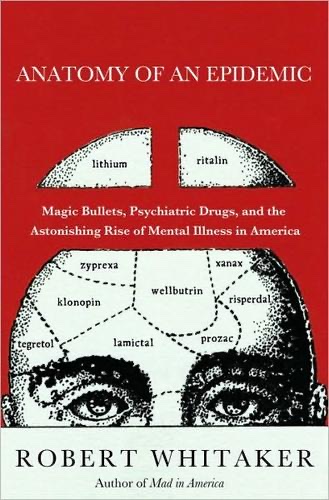
Cover of Anatomy of an Epidemic

Anatomy of an Epidemic

Robert Whitaker

6 ideas

  1. Drug-Induced Compensatory Brain Adaptation

    A psychiatric drug perturbs a neurotransmitter pathway, and the brain responds with compensatory changes that oppose the drug. Antipsychotics that block dopamine receptors can lead the brain to grow more of them, and SSRIs can lead it to reduce serotonin output. After prolonged use, the brain works in a way that is abnormal both qualitatively and quantitatively, a framing the book takes from former NIMH director Steven Hyman.

  2. Chemical Imbalance Theory Was Reverse-Engineered

    The book argues that the idea that depression and schizophrenia are caused by low serotonin or excess dopamine was inferred from how the drugs act, not discovered independently. Studies of unmedicated patients did not reliably find these imbalances. The theory persisted because it justified the drugs as correcting a deficit, like insulin for diabetes.

  3. Harrow's Fifteen-Year Schizophrenia Follow-Up

    Martin Harrow's NIMH-funded study followed schizophrenia patients for roughly fifteen years. About 40 percent of those who stopped antipsychotics were in recovery, compared with about 5 percent of those who stayed on them. The book reads the long-term data as reversing the short-term picture, with the medicated group doing worse over time.

  4. WHO Studies Favor Less-Medicated Countries

    World Health Organization cross-cultural studies found that schizophrenia patients in poorer countries such as India, Nigeria, and Colombia had markedly better outcomes than patients in the US and Europe. Continuous antipsychotic use was far less common in the poorer countries. The book treats this as population-level evidence that heavy, ongoing medication may impede natural recovery.

  5. Disability Rolls as Treatment Outcome

    If a treatment paradigm works, the number of people disabled by the conditions it treats should fall as the treatment spreads. After Prozac arrived in 1987, the number of Americans on SSI or SSDI for mental illness roughly tripled over two decades. The book reads rising disability rolls as an outcome measure that tests the paradigm, not merely a sign of better diagnosis.

  6. Withdrawal Relapse Masquerades as Illness

    Drug-discontinuation trials often take stable patients off medication abruptly and count what follows as relapse of the underlying disease. Because the brain has adapted to the drug, sudden withdrawal can itself trigger rebound symptoms such as supersensitivity psychosis. This confounds the trials and makes the drug look protective when it may be causing the relapse.

Save and mark ideas in the app