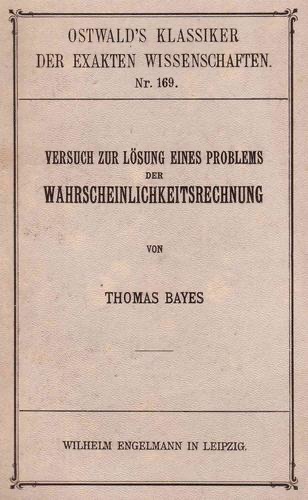
Inverse probability: reasoning from effects to causes
Earlier probability theory ran forward, from a known chance to the likely outcomes of trials. Bayes reverses the direction. Given only the observed count of successes and failures, he computes the probability that the unknown underlying chance lies between any two chosen bounds. This makes the cause the uncertain quantity and treats the data as fixed.