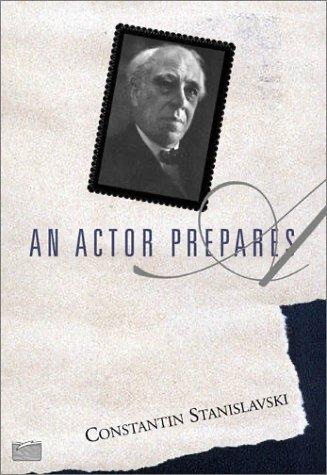
Cover of An Actor Prepares

An Actor Prepares

Konstantin Stanislavski

3 ideas

  1. The Magic If as imaginative lever

    The actor does not try to believe the fiction is true; instead they ask 'what would I do if this situation were real?' Because the 'if' openly admits the pretence, it removes the pressure to fake belief and triggers a genuine inner impulse to act. Given circumstances (the plot, time, place, and conditions of the play) supply the specifics that the 'if' works on.

  2. Units and objectives segment the action

    A role is broken into units, each defined by an objective phrased as a verb ('I want to...') rather than a noun or a mood, because verbs push toward action while states push toward display. The objectives link into a continuous through-line of action serving one super-objective, so every moment on stage is driven by what the character wants rather than by what the actor wants to show.

  3. Emotion is awakened indirectly, not forced

    Tortsov warns that trying to play an emotion directly tends to produce stock, mechanical signs of it, so the actor should approach feeling indirectly, through physical actions, concentrated attention and emotion memory. Emotion memory is the recalling and reliving of feelings the actor has actually experienced, which can be revived again on stage. Muscular relaxation supports this work, since tension interferes with attention and genuine response.

Save and mark ideas in the app