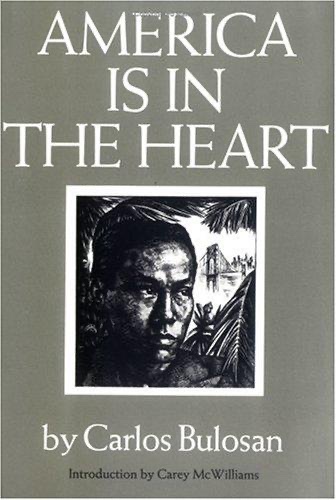
Cover of America Is in the Heart

America Is in the Heart

Carlos Bulosan

3 ideas

  1. Peasant boy's journey from Binalonan to canneries

    Allos, a peasant boy from Binalonan in Pangasinan, watches his family lose its land piece by piece to debt and absentee landlords, and his mother sell salted fish in the market to keep them fed. He sails to Seattle in 1930 and is immediately sold by a labour contractor to an Alaskan fish cannery. Afterwards he follows the harvests through California lettuce and asparagus fields, where he is beaten, jailed and driven out of towns by vigilantes. After a long illness with tuberculosis he emerges as a writer and union organiser, and ends still professing faith in America.

  2. Two Americas: the ideal versus lived reality

    The narrator separates America as a moral ideal of equality, held 'in the heart', from America as the actual system of racist laws, vigilantes and labour contractors that brutalises him. Keeping them distinct lets the oppressed claim the nation's own professed values as a weapon against its practice. It also rescues hope from being destroyed by experience, because the ideal becomes something the excluded build rather than something they are given.

  3. Literacy and organising convert victimhood into agency

    Isolated migrant workers absorb violence as private humiliation or turn it into despair, gambling and fights among themselves. Reading gives them a language to name the system that is harming them. Union organising turns that shared understanding into collective action, so education and solidarity together transform scattered victims into political actors who can contest the conditions of their labour.

Save and mark ideas in the app