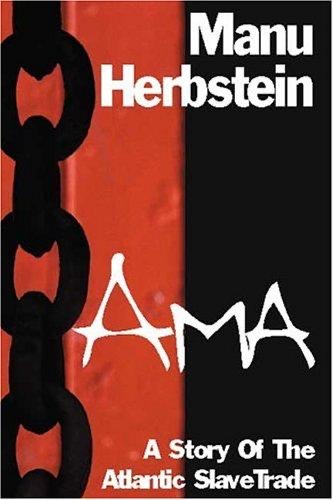
Cover of Ama: A Story of the Atlantic Slave Trade

Ama: A Story of the Atlantic Slave Trade

Manu Herbstein

4 ideas

  1. One girl's route from savanna to Brazil

    A girl from the northern savanna of present-day Ghana is captured and taken south to Asante Kumasi, where she is given the name Ama and held in an Asante household. She is then sold to the Dutch at Elmina Castle, abused there, and shipped across the Atlantic to labour on a Brazilian sugar plantation. Her route follows the trade's full supply chain, from inland capture through coastal fort and Middle Passage to plantation, and every stage is shown from the captive's point of view.

  2. The trade ran on layered complicity

    The Atlantic slave trade was not a simple European seizure of Africans. It was a relay in which African states raided or bought people from weaker peripheral groups, sold them to European forts, and received guns and goods in return, which in turn financed further raiding. Every link profited, so no single actor controlled or bore sole responsibility for the system. That structure is what made it durable.

  3. Each transfer changes what a captive is

    Following Ama through successive hands shows her status shifting with each transfer: capture tears her from kin, Kumasi renames her and holds her within a household, and Elmina and the ship bring her toward treatment as cargo. The movement is not a clean sequence of losses, since at Elmina she still meets a prospective marriage and lessons in reading. The novel shows the line between household slavery and chattel commodity as uneven rather than crossed in orderly steps.

  4. Faction: research-fed imagination for unrecorded captives

    The slave-trade archive was written mostly by traders and officials, so it leaves out the inner lives of the captives. Herbstein responds by imagining one captive's life and anchoring it in researched detail about places, routes and practices. The research informs the invention without guaranteeing accuracy; he admits that his Kafaba is built from descriptions of Salaga written a century later.

Save and mark ideas in the app