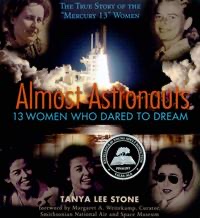
Cover of Almost Astronauts

Almost Astronauts

Tanya Lee Stone

4 ideas

  1. Mercury 13 passed tests, then got cancelled

    In 1960–61, Dr. Randy Lovelace privately gave women pilots the same physical exams used to select the Mercury Seven, starting with Jerrie Cobb, and thirteen women passed. Some scored as well as or better than the men. A further round of testing at the Naval School of Aviation Medicine in Pensacola was cancelled days before it began because NASA would not officially request it, so none of the women ever flew.

  2. Neutral credentials that silently exclude

    NASA required astronaut candidates to be military jet test pilots, and women were barred from military jet flying. The rule sounded like a merit standard, but it shut women out before any comparison of ability could take place. When officials call a barrier a matter of qualifications, check who was allowed to earn those qualifications in the first place.

  3. Insiders can entrench the barrier

    At the 1962 congressional hearings on whether astronaut selection discriminated against women, Jackie Cochran was a celebrated female aviator and a backer of the program, yet she testified against moving quickly to admit women. John Glenn testified that the social order simply excluded women from such roles. Congress took no action. A marginalized group's cause can be sunk by one of its own most prominent members, especially one who already enjoys an exceptional status inside the establishment.

  4. Failed attempts as groundwork for change

    The Mercury 13 lost their own chance, but they showed women could meet astronaut standards, and they forced the question into public record. The Soviet Union flew Valentina Tereshkova in 1963, and the US flew Sally Ride in 1983. In 1995 Eileen Collins, the first woman to pilot the shuttle, invited the surviving Mercury 13 to watch her launch. Judged as individual outcomes their effort failed, but judged across decades it made later breakthroughs easier to demand.

Save and mark ideas in the app