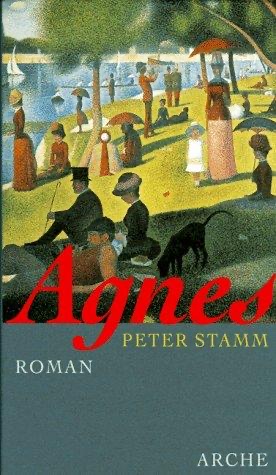
Cover of Agnes

Agnes

Peter Stamm

4 ideas

  1. The writer who scripted his lover's future

    A Swiss nonfiction writer in Chicago meets Agnes, a young physics doctoral student, at the public library, and she asks him to write a story about her. It begins as a portrait of their present but moves ahead of their life together, describing what will happen next. When she becomes pregnant and he rejects the child, he writes a parallel version in which the child is born. After a miscarriage and a reconciliation, he writes an ending in which Agnes walks into the snow and dies, and the novel opens by declaring she is dead and a story killed her.

  2. A written future becomes a behavioral script

    Once a story describes what someone will do, that person starts to measure their real actions against it and bends toward it. A narrative written to capture a life can end up governing it. The author's power grows because the other person agrees to be written, not because anyone forces them.

  3. Describing a person as quietly possessing them

    The narrator prefers the Agnes on the page, whom he can revise, to the real Agnes, whose needs, such as a child, disrupt his plans. Read this way, writing someone down lets you shape them into what you can handle and pull away from the actual person. His detachment passes for careful observation.

  4. The parallel fiction as an avoidance mechanism

    When reality forces a choice he refuses, such as an unwanted pregnancy, the narrator writes an alternate version where he made the other choice. The fiction lets him experience the road not taken without committing to it. The gap between the lived version and the written one wears away at both people.

Save and mark ideas in the app