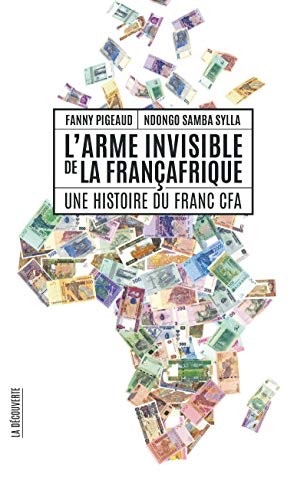
Cover of Africa's Last Colonial Currency

Africa's Last Colonial Currency

Ndongo Samba Sylla and Fanny Pigeaud

6 ideas

  1. Operations account reserve pooling at Treasury

    Member states were required to deposit a large share of their foreign exchange reserves (historically 65%, later 50%) in an 'operations account' at the French Treasury in exchange for France's guarantee of convertibility. The account is actively credited and debited, not a pile of savings parked in France, but it places African external reserves under rules set with the French Treasury, which gives France a lever over the zone's monetary management.

  2. Fixed peg to strong currency hurts development

    Pegging the CFA franc first to the French franc and then to the euro imports the monetary policy of a rich, low-inflation economy into poor commodity exporters with very different needs. The result is an overvalued currency, tight credit, and low bank lending to the private sector, which penalizes local producers and favors importers and foreign firms repatriating profits.

  3. Monetary technicality as instrument of political control

    Treat supposedly neutral monetary arrangements — pegs, reserve rules, board seats — as political structures that decide who gains and who is constrained. Read this way, the CFA system lets France keep influence over economic policy and alliances after independence while appearing to be only a technical guarantee of stability.

  4. Guinea and Togo faced danger over monetary independence

    When Sékou Touré's Guinea left the franc zone in 1960, French services flooded the country with counterfeit currency to destabilize it. In Togo, President Sylvanus Olympio was preparing a national currency when he was assassinated in 1963; Togo stayed in the zone, and the book leaves open who was responsible for his killing. The authors present these episodes as showing that seeking monetary independence could carry serious political and economic risk.

  5. 1994 devaluation decided outside African control

    In January 1994 the CFA franc was devalued by 50% against the French franc, a decision driven by Paris and the IMF and imposed on member states overnight. Import prices and living costs jumped sharply, showing that the currency's most basic parameter was set by outside actors and not by the governments whose populations bore the costs.

  6. Cosmetic reforms preserve the underlying structure

    The 2019 announcement renaming the West African CFA franc the 'eco', closing the operations account, and withdrawing French board members left the euro peg and France's convertibility guarantee in place. Because the guarantee remains, France keeps its leverage, so symbolic changes defuse protest without transferring real monetary sovereignty.

Save and mark ideas in the app