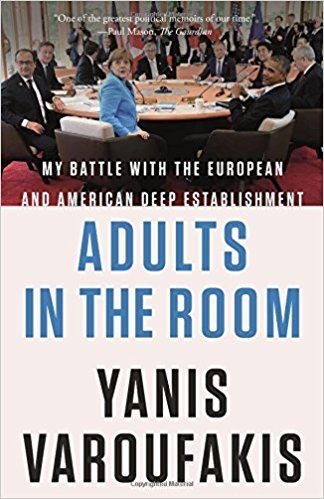
Cover of Adults in the Room

Adults in the Room

Yanis Varoufakis

4 ideas

  1. Extend and pretend loans to insolvent debtors

    When a debtor is bankrupt rather than illiquid, creditors lend it new money to repay old debts and call the loan a rescue. This keeps up the fiction that the debt will be repaid. Varoufakis argues that the 2010 Greek bailout used this move to shift private French and German bank losses onto European taxpayers, while austerity shrank the Greek income needed to service the debt and made insolvency worse.

  2. Insiders never break ranks in public

    Varoufakis recounts Larry Summers asking him early on whether he wanted to be an insider or an outsider. Outsiders are free to speak the truth but are ignored by those who decide. Insiders gain influence only by never criticizing the group or its decisions publicly. Seen this way, negotiation inside elite institutions is governed by loyalty to the club, not by the merit of arguments, which explains why sound economic proposals met silence.

  3. Eurogroup wields power with little legal accountability

    Varoufakis attacks the Eurogroup, the body of eurozone finance ministers that decided Greece's fate, as an informal forum that works without the legal accountability of a formal EU institution and keeps no published minutes. He describes decisions pre-cooked by officials and ratified by consensus in a way that let creditor positions prevail over a national electoral mandate, captured in Schäuble's remark that elections cannot be allowed to change an agreed economic programme.

  4. Greece's 2015 referendum 'No' turned capitulation

    On 5 July 2015, about 61% of Greek voters rejected the troika's bailout terms in a referendum called by Alexis Tsipras, after the ECB had capped liquidity and the banks had closed; that night Tsipras moved toward accepting harsher terms, and Varoufakis resigned the next morning. Within days, under Schäuble's threat of a temporary Grexit, the government agreed to preliminary terms for a third bailout, whose memorandum was signed on 19 August 2015. Varoufakis presents this as a popular mandate overridden by creditor leverage over a currency Greece did not control.

Save and mark ideas in the app