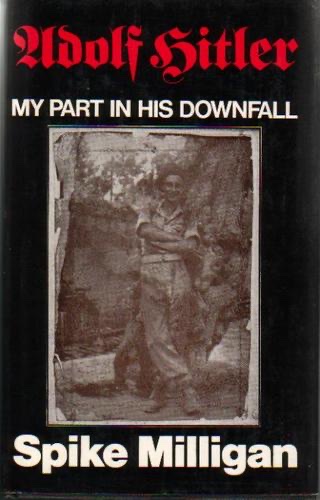
Cover of Adolf Hitler: My Part in His Downfall

Adolf Hitler: My Part in His Downfall

Spike Milligan

3 ideas

  1. Gunner Milligan's reluctant war from Bexhill

    Terence 'Spike' Milligan, a young jazz trumpeter living with his parents in south-east London, was conscripted as a gunner in the Royal Artillery and reported late to D Battery, 56th Heavy Regiment, at Bexhill-on-Sea. Through 1940–42 the unit trained on obsolete First World War-era guns amid chronic equipment shortages, while Milligan formed a jazz band with fellow gunner Harry Edgington and spent more energy on gigs, girls and dodging duties than on soldiering. The book ends with his troopship landing in Algeria in 1943, the point where rehearsal turns into real combat.

  2. War as mostly waiting and bureaucratic absurdity

    For most conscripts, war is not battle but years of drills, kit inspections, forms, rumours and idleness, run by an institution whose rules often defeat their own purpose. Viewing war from the bottom of the hierarchy shows the gap between official purpose and daily reality: men training for a modern war with antique weapons, obeying orders nobody can justify. The absurdity is not a distortion of war but an accurate record of how most of it is lived.

  3. Humour and music as conscript survival mechanisms

    Enlisted men cope with powerlessness by building small zones of autonomy: pranks, running jokes, nicknames and the unit jazz band. These rituals turn strangers into a loyal in-group and let men mock authority without open disobedience. The comedy is not escape from the war but the means by which ordinary men endure it.

Save and mark ideas in the app