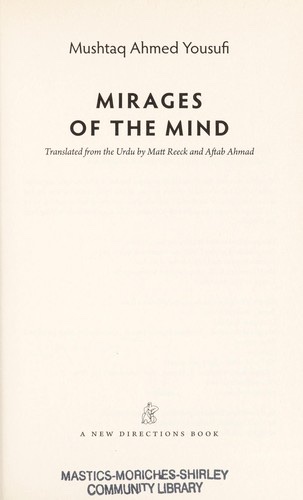
Cover of Aab-e-Gum

Aab-e-Gum

Pakistan · 1940–1980

3 ideas

Buy on Amazon

Satirical and elegiac Urdu sketches of ageing men, lost havelis and pre-Partition small-town life, recalled through memory and nostalgia after migration to Karachi.

  1. Qibla's lost haveli and wounded pride

    Qibla is Basharat's father-in-law, a hot-tempered timber merchant from Kanpur who ruled his shop and household with intimidation. After Partition he migrates to Karachi, but he keeps behaving like the master of the haveli he left behind, and he rejects the new city's ways. The haveli grows grander in his memory as his real circumstances shrink, until his pride becomes both comic and tragic.

  2. Nostalgia as a mirage of memory

    The past seen from far enough away looks like water in the desert. It seems lush and life-giving because of the distance, not because of what it actually held. The further a person travels from a time or place, especially after a rupture like migration, the more the remembered version replaces the real one.

  3. Ageing men's hostility to the present

    An old man's contempt for the new world can be read as grief rather than judgment. When he declares that everything was better before, he is saying that he himself mattered more then. Seeing this turns cantankerous old age from a comic flaw into a portrait of lost relevance.

Save ideas and give them a thumbs up or down in the app