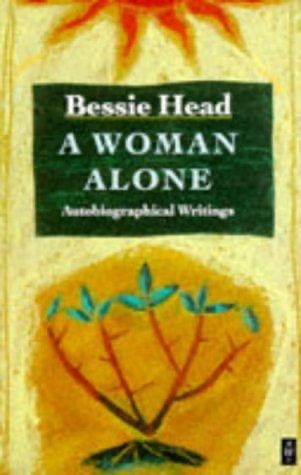
Cover of A Woman Alone

A Woman Alone

Bessie Head

5 ideas

  1. Born in an asylum to a forbidden union

    Bessie Head was born in 1937 in a Pietermaritzburg mental hospital. Her white mother had been committed there for becoming pregnant by a Black man, a union that segregationist South Africa treated as madness. Head was fostered, then placed in a mission orphanage, where at about thirteen a missionary bluntly told her the truth of her origins as though it were a hereditary stain. Her later exile, breakdown and writing all begin from a birth the state had already classified as a crime.

  2. Exit permit into fifteen stateless years

    In 1964 Head left South Africa for Bechuanaland (later Botswana) on an exit permit, a one-way document that barred her from ever returning. In the village of Serowe she lived as a refugee for about fifteen years, often poor and often treated as a suspicious outsider. She worked in teaching and on cooperative gardens, raised her son alone, and was hospitalized during a severe breakdown. Botswana granted her citizenship only in 1979, which shows how exile can remove a person's legal existence as well as her geographic one.

  3. Evil is the hunger for power

    Head argues that the root evil she met under apartheid was not whiteness itself. It was the appetite to dominate other people and to deny them their humanity. She holds that this same appetite reappears unchanged in Black nationalists, in villagers and within one's own psyche. Because of this, replacing one ruling group with another does nothing unless people give up the wish to rule over others.

  4. God located in ordinary people

    Head rejects a God enthroned above humanity, since such a God copies the structure of oppressive power and asks for submission. She moves holiness instead into ordinary people, and especially into the underdog, the poor and those who get no attention. For her, reverence means treating each person as sacred rather than worshipping an authority.

  5. Writing as survival for the unhoused

    For someone with no country, no family lineage she could claim, and no secure social place, writing worked as a way of keeping a self together and not as a career. Head built her own belonging by recording closely the ordinary life, history and speech of Serowe. The attention a stranger pays to a small place can become a substitute home when birthright gives her none.

Save and mark ideas in the app