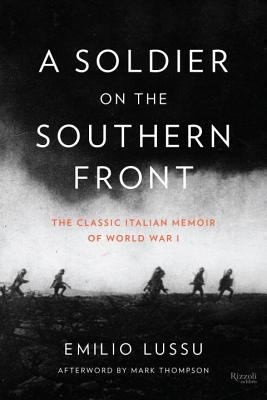
Cover of A Soldier on the Southern Front

A Soldier on the Southern Front

Emilio Lussu

4 ideas

  1. The Austrian officer he didn't shoot

    Lying hidden before the Austrian trenches at dawn, Lussu watched a young enemy officer drink his morning coffee and light a cigarette, and he held the man in his rifle sights at point-blank range. He could not fire: once the enemy became a particular man doing ordinary things, killing him felt like murder rather than war. He concluded that war is waged against an army, an abstraction, and that the right to kill collapses when the target becomes an individual.

  2. General Leone and the Farina armor

    General Leone ordered a squad of sappers, clad in heavy Farina steel breastplates and helmets, to advance in daylight and cut the intact Austrian wire, confident the armor would protect them. Enemy machine guns cut them down within minutes, and the general remained unmoved. The episode stands as a concrete case of a commander's faith in a technical gimmick overriding what the men at the front could plainly see.

  3. Trench war ran on cognac

    Lussu argues that alcohol, distributed before assaults and consumed constantly by officers and men, was a structural component of the war rather than a vice within it. Men could only be made to climb out into certain death if their fear and judgment were chemically blunted, so the army depended on intoxication to produce the obedience that reason would refuse.

  4. Distant command repeats failed frontal assaults

    Generals far from the line kept ordering identical frontal attacks against uncut wire and fixed machine guns because failure never reached them as information, only as casualty numbers. Officers who objected risked being accused of cowardice, and soldiers faced execution for refusing. The hierarchy therefore filtered out the feedback that would have stopped the slaughter, so the same failed plan was executed again and again.

Save and mark ideas in the app