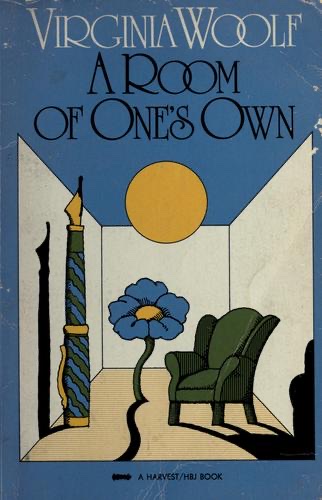
Cover of A Room of One's Own

A Room of One's Own

Virginia Woolf

6 ideas

  1. Material conditions precede creative genius

    Woolf argues that a woman needs five hundred pounds a year and a room with a lock on the door to write fiction, because intellectual freedom depends on material things. Genius does not rise above poverty and interruption. Economic independence and protected solitude are what turn talent into finished work, and their absence explains missing work better than any lack of ability.

  2. Judith Shakespeare, the imagined gifted sister

    Woolf invents a sister of Shakespeare who is just as gifted. She is denied schooling, pushed into marriage, and laughed at when she goes to London to act. She ends up pregnant and kills herself, leaving no work behind. The thought experiment shows that equal genius, under the conditions women actually lived in, produces not masterpieces but silence and ruin.

  3. Women as magnifying looking-glasses

    Women have served for centuries as looking-glasses that reflect men at twice their natural size. This inflated self-image feeds men's confidence to act, conquer and rule. That is why men react with such hostility when women criticise them: telling the truth shrinks the reflection and threatens the vitality it supplied.

  4. Anger distorts the writer's vision

    When a writer carries grievance about her own treatment, the anger bends the work. The writer argues her own case instead of seeing the characters and the world directly. Woolf reads 'Jane Eyre' through this lens, finding Charlotte Brontë's resentment breaking into the narrative. Only a mind with its grievances burned away, like Shakespeare's, can write with full integrity.

  5. The androgynous mind as creative ideal

    Woolf proposes that the greatest minds join male and female qualities, as Coleridge suggested. A mind that is purely one sex, writing from self-conscious assertion of its gender, is sterile. Creative fertility comes when the two halves work together without either one claiming attention for itself.

  6. Literary forms are shaped by exclusion

    The sentence and the genres women inherited were made by men for men's uses, and they fit women's thought poorly. Women turned to the novel partly because it was young, flexible, and could be written in a shared sitting-room amid interruptions. Traditions, and the 'thinking back through our mothers' that sustains writers, have to be built by generations, and women were denied that accumulation.

Save and mark ideas in the app