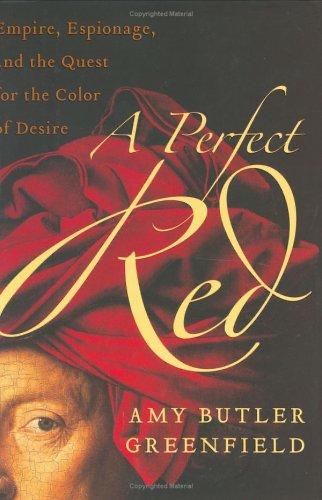
Cover of A Perfect Red

A Perfect Red

Amy Butler Greenfield

4 ideas

  1. Thiéry de Menonville smuggles cochineal from Oaxaca

    In 1777 the French botanist Nicolas-Joseph Thiéry de Menonville entered Spanish Mexico under false pretenses, bought cochineal-infested nopal pads in Oaxaca, and smuggled them to the French colony of Saint-Domingue. The insects arrived alive and he cultivated them there. After his death the plantings were neglected and the colony lost the stock within a few years.

  2. Monopoly protected by ignorance and indigenous skill

    Spain's centuries-long control of cochineal rested on three things. Only the Americas had the insect. Its production depended on Mixtec and Zapotec growers who used labor-intensive techniques. Europeans also misunderstood what it was, and debated for over a century whether cochineal was a seed, a berry, or an animal. Microscopists such as Leeuwenhoek eventually showed it was an insect, but the confusion itself had helped keep would-be competitors from cultivating it.

  3. Color prestige tracks technical difficulty

    Before cochineal, a bright, colorfast red was hard to make, and scarce dyes like kermes made scarlet a marker of rank, wealth, and power. The value of a color comes from how hard it is to produce, not from its beauty alone. Innovations that make the color easier to produce first create new elite demand, then erode the status the color signals.

  4. Synthetic dyes collapse the cochineal economy

    After Perkin's aniline mauve in 1856, chemists produced a wave of coal-tar dyes. In 1868 Graebe and Liebermann synthesized alizarin, the red of madder. Cheap, consistent synthetic reds undercut cochineal within decades and devastated producers in Mexico and in the Canary Islands, where cultivation had expanded in the 19th century. Cochineal survived mainly in the niche role of carmine for food and cosmetics.

Save and mark ideas in the app