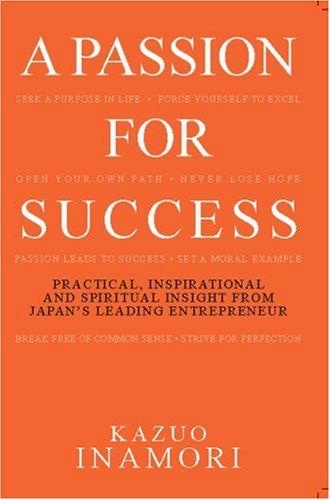
Cover of A Passion for Success

A Passion for Success

Kazuo Inamori

5 ideas

  1. Amoeba management through small self-accounting units

    The company is split into small units of roughly five to fifty people, each run as a mini-business that buys from and sells to other units at negotiated internal prices. Each unit tracks its own 'hourly efficiency': value added (sales minus all costs except labor) divided by total hours worked. Frontline workers can then see in near real time how their own choices create or destroy profit, which turns them into managers rather than executors.

  2. Young employees' ultimatum redefines Kyocera's purpose

    In 1961, two years after Inamori founded Kyocera, about ten recently hired young employees presented demands for guaranteed future raises and bonuses and threatened to quit. Inamori could not honestly promise figures, so he negotiated with them for three days and nights and pledged only to protect their livelihoods with his life. Afterward he rewrote the company's purpose from realizing his own engineering ambitions to 'pursuing the material and intellectual well-being of all employees,' and later used this as the founding basis of Kyocera's philosophy.

  3. Life outcome equals attitude times effort times ability

    Inamori's equation holds that the result of a life or career equals way of thinking multiplied by passion (effort) multiplied by ability. Passion and ability range from zero to 100, but way of thinking ranges from minus 100 to plus 100. Because the terms multiply, a talented and driven person with a negative outlook produces a large negative result, while an ordinary person with a sound attitude and great effort can outperform the gifted.

  4. Decide by what is right as human

    Business decisions should be tested against the simple question 'What is the right thing to do as a human being?' That means asking whether an action is fair, honest, and free of greed, rather than whether it is customary, legal, or profitable in the short term. Inamori argues that this childlike moral test gives consistent answers in unfamiliar situations where industry rules of thumb fail, and that lasting success comes only from decisions that pass it.

  5. Maximize revenue, minimize expenses as core principle

    Among Inamori's management principles is the directive to maximize sales and minimize expenses, with profit following as the difference. He treats conventional industry cost ratios and margins as poor excuses for spending and urges scrutiny of expenses rather than accepting them as customary. Paired with daily unit-level accounting, this principle helps spread cost awareness to workers beyond the finance department.

Save and mark ideas in the app