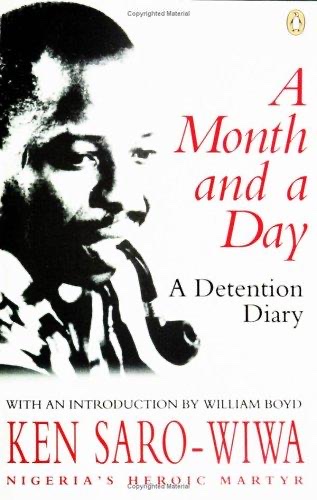
Cover of A Month and a Day

A Month and a Day

Ken Saro-Wiwa

4 ideas

  1. Oil federalism as internal colonialism

    Nigeria's federal structure lets majority ethnic groups that control the central state take oil wealth from small minority peoples whose land produces it. Revenue allocation moved away from the derivation principle, which returned revenue to producing areas, toward central pooling. As a result, the Ogoni bear the environmental cost of extraction while the revenue flows to Lagos, Abuja and the dominant groups, much like a colony exploited by a metropole.

  2. Environmental degradation as slow genocide

    For a small farming and fishing people whose survival depends on land and creeks, decades of oil spills, gas flaring and polluted water destroy the material basis of the community's existence. Saro-Wiwa frames this as an ecological war, a genocide carried out through pollution rather than violence, which threatens the Ogoni as a distinct people. Calling it genocide turns an environmental grievance into a claim of collective survival.

  3. Converting grievance into a rights charter

    The 1990 Ogoni Bill of Rights restated scattered complaints about pollution and neglect as formal constitutional demands. It asked for political autonomy within Nigeria, control of a fair share of the region's resources, protection of the environment, and cultural and linguistic rights. The charter then went to the military government and to international bodies such as the UN. This gave a marginal group a legitimate, legible platform that bypassed a hostile national state.

  4. The January 1993 Ogoni mass march

    On 4 January 1993 an estimated 300,000 Ogoni marched peacefully across their territory and declared Shell unwelcome in Ogoniland. Saro-Wiwa says he chose the date to follow the 2 January handover Babangida had promised. The disciplined, nonviolent turnout drew attention to the Ogoni cause and set the movement against both the military regime and the oil company.

Save and mark ideas in the app