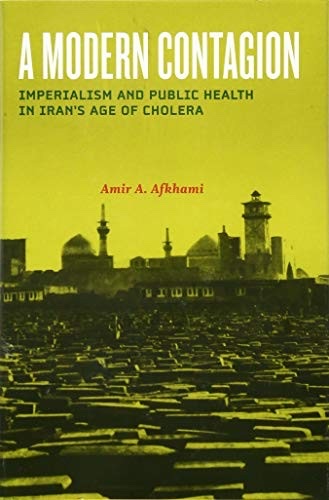
Cover of A Modern Contagion

A Modern Contagion

Amir Afkhami

6 ideas

  1. Epidemics exposed state weakness, fueling revolution

    Repeated cholera outbreaks showed Iranians that the Qajar monarchy could not protect them, which drained its legitimacy. Elites fled the cities while the poor died, and that visible failure fed the discontent that erupted in the Constitutional Revolution of 1905–1911. The epidemic worked as a political stress test the state kept failing in public.

  2. Quarantine as an instrument of imperial leverage

    Sanitary measures that looked neutral and scientific were used by Britain and Russia to project power over Iran. Cordons, border inspections and Persian Gulf quarantine stations let them regulate trade, restrict movement and gain footholds in Iranian territory. Reading public health rules for who controls them, rather than only for what they prevent, shows how disease policy doubles as foreign policy.

  3. Pilgrimage routes and corpse traffic spread cholera

    Shi'i pilgrimage to the shrine cities of Iraq and to Mashhad, including carrying corpses for burial in holy ground, moved cholera along the same routes as the faithful. Attempts to regulate these practices set foreign and state sanitary authorities against religious custom and clerical authority. This made epidemic control a contest over sacred practice, not only a medical problem.

  4. Iran's sanitary council and contested foreign influence

    Iran's sanitary council began with mainly Iranian physicians and limited powers, and foreign legations sought influence through it. Its record of resisting British interests shows the council was a site where sovereignty over public health was contested, not simply handed over. The book treats it as a place where domestic and foreign claims over health policy met.

  5. Public health became a tool of state-building

    Later reformers, especially under the Pahlavis, took over sanitation, quarantine and medical modernization as projects of the national state. Protecting bodies from epidemics became a way to project centralized authority, reclaim functions from foreign powers, and claim modern legitimacy. Disease control was built into the construction of the state itself.

  6. 1918 influenza compounded by famine and occupation

    The 1918 influenza pandemic struck an Iran already weakened by wartime occupation, famine and a collapsed central government. As a result, its death rate was among the highest in the world. The case shows that pandemic mortality depends heavily on the prior condition of the society, including nutrition, governance and foreign interference, rather than on the virus alone.

Save and mark ideas in the app