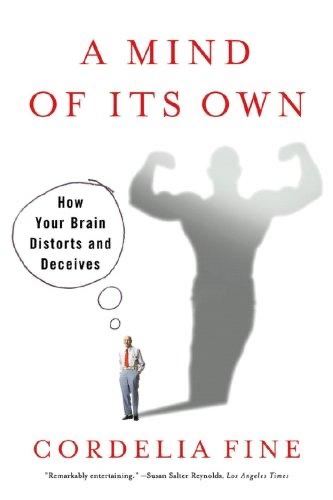
Cover of A Mind of Its Own

A Mind of Its Own

Cordelia Fine

6 ideas

  1. The brain as its owner's defense lawyer

    The brain does not weigh evidence about the self neutrally. It works like a hired advocate, building the most flattering case it can: it credits successes to ability, blames failures on circumstance, and rates the self above average on most desirable traits. Because this spin happens automatically and feels like honest perception, people experience their self-serving conclusions as objective judgments.

  2. Suspension bridge arousal mistaken for attraction

    In one study, men were approached by an attractive female interviewer either on a high, swaying suspension bridge or on a low, stable one. The men on the frightening bridge were more likely to write sexual content into a story-telling task and more likely to phone her afterward. They had read their fear-driven physiological arousal as romantic interest, which shows that emotions are partly built from after-the-fact interpretations of bodily states.

  3. Coin-flip experiment exposing moral hypocrisy

    In one experiment, participants had to assign themselves and another person to either a pleasant task or a dull one, and were given a coin to make the choice fairly. Many flipped the coin, yet the flippers gave themselves the good task at the same lopsided rate as those who never flipped, apparently ignoring or reinterpreting unfavorable results. People want to look fair to themselves more than they want to actually be fair.

  4. Two-factor account of delusional belief

    Delusions such as Capgras, the conviction that a loved one has been replaced by an impostor, appear to need two faults at once. The first is an anomalous experience, such as seeing a familiar face without the usual emotional response. The second is a failure to evaluate the belief that explains it. The biases that let delusions persist, such as jumping to conclusions and favoring confirming evidence, are exaggerated forms of reasoning habits that ordinary minds also show.

  5. Mixed evidence hardens rather than moderates beliefs

    When supporters and opponents of the death penalty read the same balanced set of studies, each side rated the studies that agreed with them as sound and picked apart the ones that did not. Both sides came away more polarized. Rather than updating on evidence, the brain scrutinizes disconfirming data harder than confirming data, so exposure to contrary evidence can deepen conviction.

  6. Stereotypes activate automatically even in egalitarians

    Cultural stereotypes are triggered automatically when people encounter members of a group, including people who sincerely reject prejudice. Overriding them takes deliberate control, which depends on limited mental resources. When people are tired, distracted, rushed or depleted, biased responses leak through, so good intentions alone do not guarantee unbiased behavior.

Save and mark ideas in the app