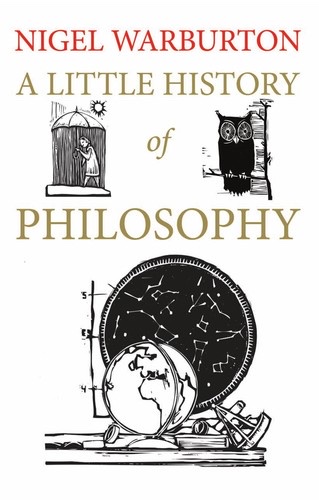
Cover of A Little History of Philosophy

A Little History of Philosophy

Nigel Warburton

4 ideas

  1. Socrates dies rather than stop questioning

    In 399 BC an Athenian jury convicted Socrates of corrupting the young and not respecting the city's gods, after his public questioning had embarrassed people by exposing that they did not know what they claimed to know. Warburton presents his stance as a hypothetical: even if he were offered his freedom on condition that he stop philosophizing, he would refuse, because the unexamined life is not worth living. He then drank the poison hemlock, and the episode shows that he valued his philosophical integrity above his own survival.

  2. Socratic method: knowing you know nothing

    Socrates claimed he was wise only because he knew he did not know, while others falsely believed they did. His method was to ask someone to define a concept like courage or justice, then use counterexamples to show that the definition fails, forcing a revised answer and exposing hidden contradictions. The point is not to win but to strip away false certainty so that real inquiry can begin.

  3. Descartes' method of radical doubt

    Descartes decided to treat any belief that could possibly be doubted as false, using thought experiments like dreaming and an evil demon who deceives the senses, so he could find a foundation that was completely certain. The one belief that survived was 'I think, therefore I am': the act of doubting proves there is a thinker doing the doubting. From that single indubitable point he tried to rebuild knowledge, which illustrates how deliberate skepticism can be used to test which beliefs are load-bearing.

  4. Suffering, not species, sets moral concern

    Peter Singer argues that what matters morally is the capacity to suffer, not whether a being is human. Giving less weight to animal pain simply because animals belong to another species is 'speciesism', a prejudice structurally the same as racism or sexism. The argument implies that practices like factory farming need justification in terms of the suffering they cause, and that membership in a group cannot excuse it.

Save and mark ideas in the app