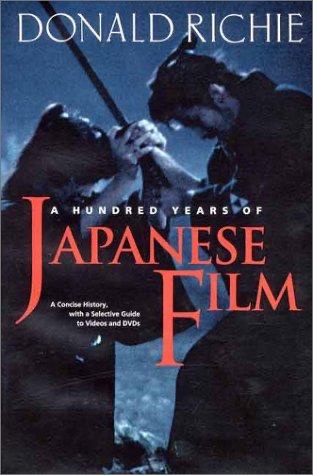
Cover of A Hundred Years of Japanese Film

A Hundred Years of Japanese Film

Donald Richie

2 ideas

  1. Presentational versus representational modes of cinema

    Japanese film moves between two modes: the presentational, which openly displays its artifice through stylized acting, theatrical staging and formal composition drawn from kabuki and noh, and the representational, which imitates Western realism and hides its construction. Many Japanese directors blend the two, so the useful question for any film is not whether it is realistic but which mode is doing the work at a given moment.

  2. Ozu's low, held camera as composition

    Ozu set his camera low and level and rarely moved it, cutting between rooms and objects rather than moving the camera and inserting still shots of empty spaces. Richie accounts for this low, fixed position through its compositional effects and the practical constraints of shooting, not as a stance of seated contemplation. Knowing this, a viewer can see how the held frame shapes each composition in Ozu's films.

Save and mark ideas in the app