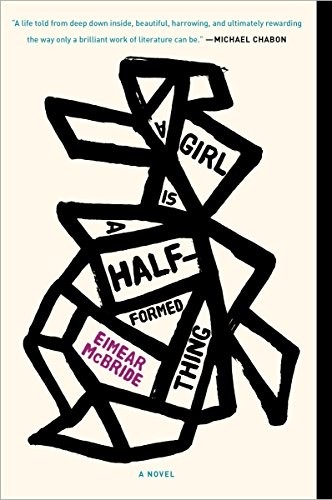
Cover of A Girl Is a Half-formed Thing

A Girl Is a Half-formed Thing

Eimear McBride

4 ideas

  1. Girl, damaged brother, abusive uncle, drowning

    An unnamed girl in rural Catholic Ireland grows up beside her older brother, left cognitively impaired by a brain tumour treated in early childhood, with a devout, harsh single mother. At thirteen she is sexually abused by her uncle and then spends her teens and university years in compulsive, degrading sexual encounters. When the brother's tumour returns and he dies, she seeks out violent sex, then walks into a lake and drowns.

  2. Syntax fractured to mirror unformed consciousness

    The prose breaks grammar, drops words, and splits sentences so that the language itself registers experience before it has been ordered into thought. Trauma, sensation, and shame arrive as sound and fragment rather than as reflection. Reading form this way treats broken syntax as the record of a mind that has not yet been allowed to become whole.

  3. Early abuse shadows her later sex

    In the novel, the girl's abuse by her uncle at thirteen marks her body as a place where another's desire has overridden her own, and much of her later punishing sex reads partly as reenactment of that violation. But McBride also presents some of her university sex as liberation, so the book shows trauma as one strand in her sexuality rather than its whole explanation.

  4. The brother as anchor of her self

    The girl's sense of herself is bound up with her brother, whom she protects from the world's cruelty against a harsh mother and punitive religion, though their bond is also troubled and not simply pure. His illness and death strip away one of the central structures of her identity, and her collapse follows.

Save and mark ideas in the app