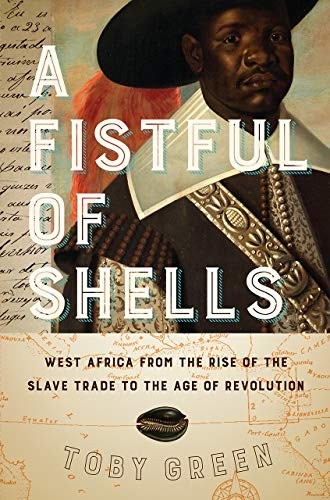
Cover of A Fistful of Shells

A Fistful of Shells

Toby Green

6 ideas

  1. Currency asymmetry drove the slave trade

    West African states exported gold, a durable store of value that could be used for long-term accumulation, and imported cowries, copper and cloth, which were currencies that wore out, inflated or could be swapped at will. This trade in capital made Europe's stock of durable wealth grow while West Africa's store of value drained away. That growing imbalance helped push African elites toward exporting people as the remaining high-value commodity.

  2. Cowrie inflation as imported monetary shock

    European traders shipped cowrie shells from the Maldives into West Africa in huge quantities, mainly as ballast in the Indian Ocean trade. The flood of shells steadily cut the purchasing power of the local currency. Holders of cowrie wealth lost value while the importers captured seigniorage-like gains, which weakened African economies' bargaining position.

  3. Treating textiles and iron as money

    Cloth strips, iron bars and copper manillas worked as real currencies with standardized units, not just as goods for barter. Reading them as money shows that West African economies were sophisticated and monetized. It also shows that European imports of these items were monetary interventions that reshaped local price systems and power.

  4. West African states were active historical agents

    Sahelian empires such as Mali and Songhay, and later coastal kingdoms, were centralized, literate and commercially integrated powers that shaped the terms of trade. They were not passive victims or stateless societies. The catastrophe of the slave trade came from how African political choices interacted with global economic structures, not from African backwardness.

  5. Mansa Musa's gold and Sahelian wealth

    Mali's gold was the foundation of medieval Mediterranean and Islamic currencies, and the ruler's lavish pilgrimage through Cairo reportedly depressed gold's value there. The episode shows that West Africa was once a core supplier of the world's store of value. The book's argument then traces how that position was eroded rather than simply absent.

  6. Slave trade fueled militarization and political revolution

    Demand for captives, paid for partly with imported firearms and currency goods, rewarded warrior aristocracies and raiding states over agricultural and commercial elites. The resulting militarization and inequality generated internal revolts, including Islamic reformist movements, by the late eighteenth century. West Africa thus had its own age of revolution, driven by the social strains of the export economy.

Save and mark ideas in the app