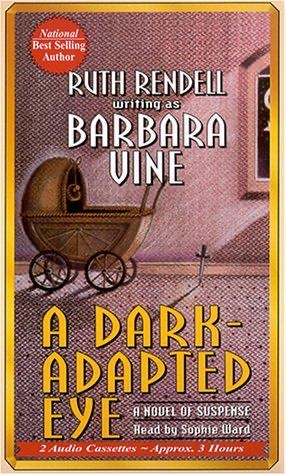
Cover of A Dark-Adapted Eye

A Dark-Adapted Eye

United Kingdom · 1949

2 ideas

Buy on Amazon

In 1940s England, Vera Hillyard commits a murder that leaves her family with a history to untangle. Looking back, her niece Faith Severn pieces together the relationships around Vera and the path to her execution. Published by Ruth Rendell as Barbara Vine, the novel makes the family’s account of the crime its mystery.

  1. Seeing family truth requires dark adaptation

    Like an eye adjusting to darkness, understanding of a family's hidden life only emerges slowly and in retrospect. Details a child saw but could not interpret become legible decades later, once the viewer knows what to look for. The truth was present in plain sight all along. What was missing was the adjusted perception needed to read it.

  2. Insider reconstruction versus public case narrative

    The public, legal story of a crime (sibling jealousy, a disputed child, a verdict) differs from the private story known only to family insiders. When an outside writer investigates the case, a family member is pushed to assemble her own account from partial memories and unreliable relatives. Each surviving witness edits the past to protect themselves or the dead, so any 'true' version is a negotiated reconstruction rather than a recovered fact.

Save ideas and give them a thumbs up or down in the app