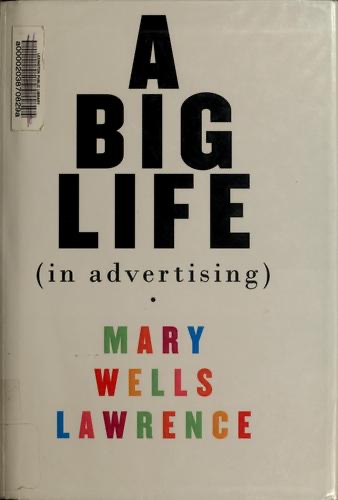
Cover of A Big Life in Advertising

A Big Life in Advertising

Mary Wells Lawrence

4 ideas

  1. Braniff's End of the Plain Plane

    Working for Braniff Airways in the mid-1960s, Wells argued that interchangeable airlines could not win on advertising copy alone. She had the fleet painted in bold solid colors, put the flight attendants in Emilio Pucci uniforms, and launched the campaign as 'The End of the Plain Plane.' The product itself became the advertisement, and the account came with her when she founded Wells Rich Greene in 1966.

  2. Advertising can redefine how a product is used

    The Alka-Seltzer work showed two tablets dropping into the glass with the line 'Plop, plop, fizz, fizz,' which quietly made a two-tablet dose feel normal. An ad that changes the ritual of use can grow volume more than one that only argues for the brand. The creative decision here is also a consumption decision.

  3. Commercials as entertainment people choose

    Wells treated a commercial as a piece of theater competing with the programming around it, not as an interruption to be tolerated. Humor and performance, as in 'I can't believe I ate the whole thing,' earn attention and repetition that a straight product claim cannot. The audience then carries the line into everyday speech, and that becomes free distribution.

  4. I Love New York rebrands a failing city

    In 1977, with New York near bankruptcy and known for crime, Wells Rich Greene built the 'I ♥ New York' tourism campaign for New York State. It used Milton Glaser's logo, a Steve Karmen jingle, and ads featuring Broadway casts. The campaign sold the city's emotional and cultural assets rather than disputing its problems, and it became one of the most durable place-brands in the world.

Save and mark ideas in the app