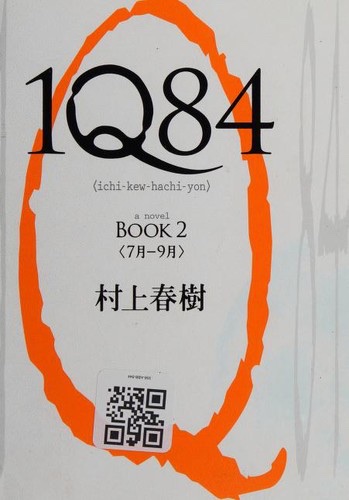
Cover of 1Q84

1Q84

Haruki Murakami

4 ideas

  1. Ghostwriting Air Chrysalis rewrites reality

    Tengo, a math tutor and would-be novelist, is hired by the editor Komatsu to secretly rewrite 'Air Chrysalis', a strange novella by the seventeen-year-old Fuka-Eri, who escaped the cult Sakigake, where her father is the leader. The polished book becomes a bestseller, and because it describes the Little People and their 'air chrysalis' as fact, publishing it exposes the cult's hidden workings and triggers retaliation. The episode shows the novel's premise that a text written and spread widely enough can change the world it describes instead of only reporting on it.

  2. Switching tracks into an altered world

    Aomame leaves a stalled taxi on an elevated Tokyo expressway and climbs down an emergency stairway. Afterward she finds small facts no longer match: police carry different guns, there is a news history she never heard of, and a second moon is in the sky. She names this world 1Q84, with Q for 'question'.

  3. Moral ambiguity inside the assassination of a cult leader

    Aomame is sent to kill the Sakigake leader for raping young girls. He knows she is coming, lets her do it, and argues that he is only a vessel for the Little People, that good and evil are a shifting balance rather than fixed categories, and that his death will keep Tengo alive. The book presents this without settling it: a clear moral mission can become transactional, and killing a monster can also carry out that monster's own wish.

  4. Twenty-year love as an organizing principle

    The novel treats that one gesture as the fixed point that directs both their lives and moves the plot, so their separate courses gradually converge. Read this way, a single early moment of real recognition can act as a hidden compass that explains choices which otherwise look drifting or passive.

Save and mark ideas in the app