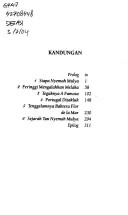
Cover of 1515

1515

Faisal Tehrani

3 ideas

  1. Nyemah Mulya's counterfactual victory over Portugal

    The novel takes the Portuguese capture of Malacca in 1511 and imagines a different outcome: the Malay woman warrior Nyemah Mulya leads resistance, defeats the invaders, and by the title year 1515 carries the fight to Lisbon itself. The story is openly alternate history, so it shows that a Malay novelist could imagine the conquest undone, not that the actual conquest was indecisive.

  2. Counterfactual history exposes manufactured inevitability

    Writing a plausible alternative outcome to a real conquest shows that the conquest's inevitability was assembled after the fact, largely from the conquerors' own chronicles. Once readers can imagine the defeated winning, the official sequence reads as contingent: one path among several, chosen by force and then naturalized by whoever controlled the record.

  3. Faith-anchored identity as the engine of resistance

    The novel frames defiance of the Portuguese as the defense of a Malay-Muslim civilizational identity, not only of territory or a ruling house. When faith and belonging are fused with the polity, losing the capital does not end the struggle, because the thing being defended survives the city's fall and can keep mobilizing people.

Save and mark ideas in the app