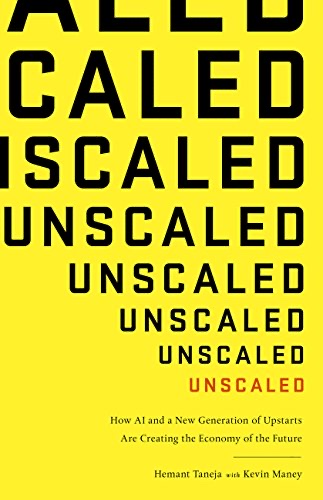
Cover of Unscaled: How AI and a New Generation of Upstarts Are Creating the Economy of the Future

Unscaled: How AI and a New Generation of Upstarts Are Creating the Economy of the Future

1900–2030

6 ideas

Buy on Amazon

An argument that AI and rentable platforms reverse economies of scale, letting small focused firms outcompete giants and unbundle industries such as energy, healthcare, education and finance.

  1. Unscaling as the new economic logic

    For a century bigger meant cheaper and better; Taneja argues AI and rentable platforms now let small, focused firms outcompete giants. The economies of scale that built the industrial era are being reversed into economies of unscale.

  2. Rent scale instead of owning it

    Startups plug into cloud, mobile, and AI platforms to access capabilities that once required massive fixed investment. Ownership of infrastructure becomes a liability; access on demand becomes the advantage.

  3. Mass customization beats mass production

    AI makes it economical to serve narrow segments and even individuals with tailored products. The book predicts markets fragmenting away from one-size-fits-all offerings toward niche, personalized value.

  4. Industries as unbundling targets

    Taneja reads energy, healthcare, education, and finance as vertically integrated systems ripe to be broken into focused, platform-native players. Each sector chapter applies the same unscaling lens.

  5. AI as a general-purpose leverage layer

    Artificial intelligence is framed not as a product feature but as the ambient capability that makes small teams behave like large organizations. It supplies the intelligence that scale used to buy.

  6. Winners will be focused, not diversified

    The future belongs to firms that do one thing exceptionally on top of shared platforms rather than sprawling conglomerates. Corporate breadth becomes a handicap in an unscaled economy.

Save ideas and give them a thumbs up or down in the app