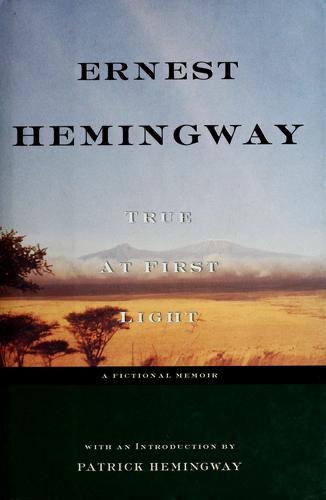
Cover of True at First Light

True at First Light

Ernest Hemingway

5 ideas

  1. Truth Decays By Late Morning

    What feels absolutely true at first light — in the clarity of dawn — becomes a lie by noon as conditions, mood, and perspective shift. Truth is not fixed but bound to the moment of perception, so honesty requires capturing the impression at its instant rather than treating any belief as permanent.

  2. Fiction As The Truer Memoir

    Recounting events exactly as they happened can distort their emotional reality, while invented or rearranged detail can convey what actually mattered. Blending memoir with fiction is treated not as deception but as a more accurate method of preserving the felt experience.

  3. The Fear Of Writing Becoming Impossible

    A writer can reach a state where the act of producing work generates dread rather than satisfaction, because the gap between intention and output becomes unbearable. This paralysis is its own distinct fear, separate from failure or criticism — the terror that the central capacity defining you has stopped functioning.

  4. Belonging As Performance In A Foreign Culture

    An outsider immersing in native African customs adopts rituals, hunting roles, and tribal affiliations while never fully shedding his European identity, exposing the friction between participation and belonging. The attempt to assimilate reveals that cultural membership is something earned and contested, not chosen by enthusiasm alone.

  5. Mary's Lion and Papa's Kenya Command

    On a 1953–54 safari camp near Kilimanjaro in Kenya, Hemingway's white-hunter friend Philip Percival departs and leaves him in charge as acting game ranger, while Wakamba trackers and Kenyan authorities warn of a possible Mau Mau raid. His wife Mary spends weeks obsessively tracking one big black-maned lion she is determined to kill herself before Christmas, and when she finally fires, Hemingway and the game warden G.C. shoot as well to bring it down. Meanwhile Hemingway pursues a half-serious 'engagement' with Debba, a young Wakamba woman from a nearby village, adopting Kamba customs while Mary looks on.

Save and mark ideas in the app