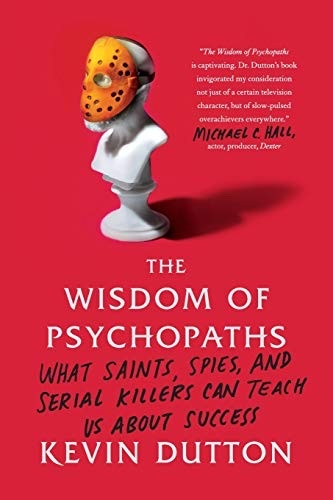
Cover of The Wisdom of Psychopaths

The Wisdom of Psychopaths

Kevin Dutton

7 ideas

  1. Functional Psychopathy as Situational Advantage

    Certain psychopathic traits become assets in specific high-stakes contexts: emotional detachment under pressure, fearlessness in danger, and ruthless decisiveness. Surgeons, special forces operatives, and CEOs often score high on these traits precisely because their work rewards cold focus over empathic hesitation.

  2. The neurosurgeon who feels no compassion

    A top neurosurgeon told Dutton that before a high-risk operation he feels no compassion for the patient. He described that emotional coldness as a clinical asset, because pity would impair the precision the patient's life depends on. Detachment here is not a moral failing but a condition of doing the job well.

  3. Psychopathy as a mixing desk

    Psychopathy is a set of separate traits, such as ruthlessness, charm, focus, mental toughness, fearlessness, mindfulness and action-orientation, each on its own dial rather than a single on/off diagnosis. Dysfunction comes from turning every dial to maximum at once, or setting them wrong for the context. Turning up only selected dials, in the right situation, produces high performance rather than harm.

  4. Psychopaths decide dilemmas without emotional interference

    In personal moral dilemmas, such as pushing one person off a footbridge to save five, most people's emotional brain regions activate and block the utilitarian choice. Psychopaths show little of this emotional activation, so they reach the cost-benefit answer quickly and without distress. The result is decisive action where others freeze or hesitate.

  5. The functional psychopath in professional roles

    Some people carry elevated psychopathic traits but also have enough impulse control, conscience or social constraint to direct those traits toward socially rewarded goals instead of crime. Professions such as CEO, lawyer, media, sales, surgery, journalism and police score highest on psychopathic traits. These roles reward calm under pressure and a willingness to make choices that impose costs on others.

  6. Present-focus shared by psychopaths and meditators

    Psychopaths live intensely in the present, with little rumination about the past or anxiety about consequences. This is structurally similar to the mindfulness that contemplatives train deliberately. Freedom from regret and dread can produce calm clarity, while the same trait without conscience produces recklessness.

  7. Psychopaths detect vulnerability from subtle cues

    In a study where participants watched videos of strangers walking, people scoring high on psychopathy identified who had previously been victimized more accurately than others did, reading gait and body language. Emotional coldness does not mean social blindness. It can coexist with sharp, instrumental reading of other people's weaknesses.

Save and mark ideas in the app