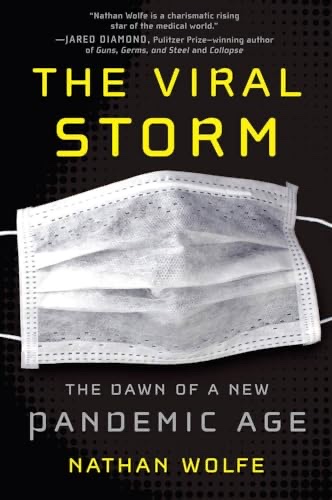
Cover of The Viral Storm

The Viral Storm

Nathan Wolfe

6 ideas

  1. The Microbially Unified Animal Kingdom

    Humans and animals share a common pool of microbes because we are connected by deep evolutionary lineage and constant physical contact through hunting, butchering, and domestication. This shared microbial space means pathogens can move across species barriers far more easily than the visible differences between animals would suggest.

  2. Five Stages of Pathogen Crossover

    A microbe becomes a human pandemic threat by passing through stages: exclusively animal, occasional animal-to-human jumps, animal-to-human plus limited human transmission, sustained human outbreaks with animal reservoir, and finally exclusively human. Tracking where a pathogen sits in this progression predicts its pandemic potential and the intervention needed to stop it.

  3. Hunting And Butchering Are Crossover Hotspots

    The act of killing and butchering wild animals exposes humans to fresh blood and tissue, creating direct conduits for novel pathogens to enter the bloodstream. Because this contact involves diverse wild species and breached skin, it is the single most efficient natural mechanism for introducing new microbes into human populations.

  4. Modern Connectivity Amplifies Local Spillovers

    A pathogen that jumps to a human in a remote forest can now reach global cities within days through air travel, dense urbanization, and trade in animals and blood products. The same interconnection that defines modern civilization converts isolated, self-limiting spillovers into potential worldwide pandemics.

  5. Viral Chatter As Early Warning Signal

    Before a pandemic erupts, there is a background hum of small, contained crossover events—'viral chatter'—where novel microbes briefly infect humans without sustained spread. Monitoring populations at high contact with animals to detect this chatter allows pandemics to be caught at their source rather than after global spread.

  6. Forecasting Pandemics Like Weather

    Rather than reacting to outbreaks after they happen, disease emergence can be treated as a predictable phenomenon monitored through global sensor networks of sentinel populations and diagnostic labs. This reframes pandemics from unavoidable disasters into forecastable events that can be anticipated and interrupted.

Save and mark ideas in the app