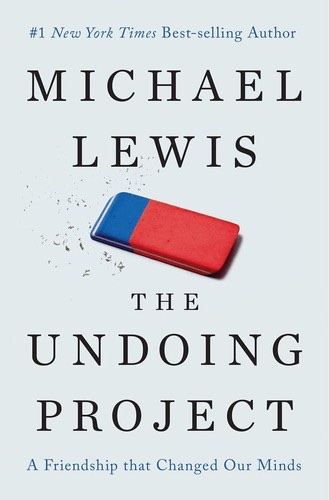
Cover of The Undoing Project

The Undoing Project

Michael Lewis

4 ideas

  1. Availability Heuristic Distorts Probability Judgments

    People estimate the likelihood of an event by how easily examples come to mind, not by actual frequency. Vivid, recent, or emotionally charged events feel more probable than they are, which is why dramatic plane crashes seem riskier than statistically deadlier car trips.

  2. Representativeness Overrides Base Rates

    People judge whether something belongs to a category by how closely it matches a stereotype, ignoring how common the category actually is in the population. A quiet, detail-oriented person gets judged 'more likely a librarian than a farmer' even though farmers vastly outnumber librarians, because the description fits the librarian image.

  3. Losses Loom Larger Than Equivalent Gains

    The pain of losing a given amount is psychologically about twice as intense as the pleasure of gaining the same amount, so people take irrational risks to avoid losses and play it safe to protect gains. This asymmetry means the same choice gets reversed depending on whether it's framed as a loss or a gain.

  4. Two Minds Behind One Discovery

    Kahneman and Tversky produced their breakthroughs not as solitary geniuses but through obsessive paired conversation, finishing each other's thoughts until neither could say whose idea was whose. The intellectual intimacy that made their work possible eventually curdled into rivalry over credit, showing that the same closeness that fuels collaboration can also poison it.

Save and mark ideas in the app