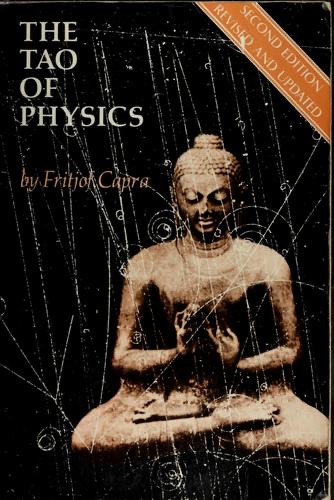
Cover of The Tao of Physics

The Tao of Physics

Fritjof Capra

6 ideas

  1. Modern physics and Eastern mysticism converge

    The worldview emerging from quantum and relativistic physics — interconnection, the dissolution of solid objects into dynamic relationships — parallels the descriptions of reality found in Hinduism, Buddhism, and Taoism. These two paths, one rational-experimental and one intuitive-meditative, arrive at structurally similar conclusions about the nature of reality.

  2. Reality as dynamic web of relationships

    At the subatomic level there are no isolated building blocks of matter; particles exist only as interconnected patterns of probabilities and relationships, not as independent things. The universe is therefore better understood as a unified web of events than as a collection of separate objects.

  3. The observer cannot be separated from the observed

    In quantum measurement, the act of observing and the apparatus chosen determine what properties appear, so the observer participates in producing the observed reality. This mirrors the mystical insistence that the division between self and world is an illusion imposed by the perceiving mind.

  4. Matter as a dance of energy patterns

    Subatomic particles are not static lumps but ceaseless processes — continually created and destroyed in transformations of energy, never at rest. This restless dynamism resembles the cosmic dance of Shiva, where creation and destruction are aspects of one perpetual rhythm.

  5. Rational knowledge has intrinsic limits

    Concepts and language are abstractions that approximate reality but cannot fully capture it, and at the foundations of physics one reaches paradoxes that defy ordinary logic. Both physicists and mystics accept that ultimate reality must be grasped through a mode of knowing that transcends linear, analytic thought.

  6. Complementarity of opposites as unifying principle

    Apparent contradictions — wave and particle, motion and rest — are not conflicts to be resolved but complementary aspects of a single reality, each true within its own context. This is the same logic as the Taoist yin-yang, where opposites are interdependent poles of one underlying whole.

Save and mark ideas in the app