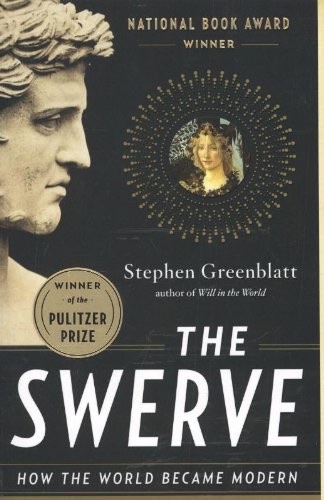
Cover of The Swerve

The Swerve

Stephen Greenblatt

4 ideas

  1. The Clinamen: The Atomic Swerve

    Lucretius held that atoms fall through the void in straight lines but occasionally swerve unpredictably, and these tiny deviations are what allow collisions, combinations, and the existence of everything—including free will. The swerve introduces indeterminacy into a mechanical universe, making creation and freedom possible without a divine planner.

  2. Material Recovery Drives Cultural Change

    The rediscovery of a single lost manuscript can reroute the intellectual trajectory of an entire civilization, because ideas survive only as fragile physical objects subject to copying, decay, and chance. The transmission of thought depends not on the inherent power of ideas but on the survival of the parchment they are written on.

  3. Poggio Bracciolini Hunts a Lost Poem

    An unemployed papal secretary and obsessive book-hunter discovered the only surviving copy of Lucretius's 'On the Nature of Things' in a remote German monastery in 1417, then had it copied before it could vanish again. A bureaucrat's private passion for classical texts, pursued in the ruins of his career, became the hinge on which a dangerous philosophy re-entered Western thought.

  4. Pleasure and Mortality Without Fear

    Viewing existence through Epicurean materialism means the universe has no gods watching, the soul dies with the body, and there is no afterlife to fear or reward—so the highest aim becomes the pursuit of pleasure and the reduction of pain in this life. This reframing strips death of its terror and locates meaning entirely in lived, embodied experience.

Save and mark ideas in the app