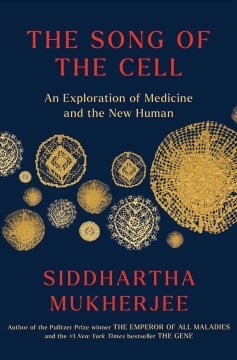
Cover of The Song of the Cell

The Song of the Cell

Siddhartha Mukherjee

4 ideas

  1. Disease as Cellular Citizenship Breakdown

    Most human illness can be reframed as a failure of cellular cooperation, communication, or behavior — cells that stop responding to signals, divide when they should rest, or refuse to die on schedule. Understanding pathology means tracing it back to which cellular function broke and why, rather than treating organs or symptoms as the primary unit of disease.

  2. The Cell as Autonomous Living Unit

    Life is built from discrete, self-contained cells that each carry out the full repertoire of living functions — metabolism, reproduction, response — while a multicellular organism is a negotiated cooperation among these autonomous units. This means an organism's properties emerge from how independent cells coordinate, not from any single controlling center.

  3. Emily Whitehead's Engineered T-Cells

    A child dying of leukemia was cured by extracting her own T-cells, genetically reprogramming them to recognize and attack cancer, and reinfusing them — turning the patient's own cells into a living drug. The case demonstrates that cells can be edited and redeployed as therapeutic agents, shifting medicine from chemicals delivered to bodies toward rebuilt cells delivered into them.

  4. Reading Discovery Through Its Instruments

    What scientists can see is bounded by the tools they build, so each leap in cell biology followed an instrument — the microscope revealed cells, staining revealed their internal structures, and flow cytometry revealed cell populations. To understand why a field knew what it knew when, look first at what its technology made visible.

Save and mark ideas in the app