Value investing and margin of safety
Buy businesses trading below intrinsic value, a discipline learned from Benjamin Graham. The gap between price and value is the buffer against being wrong.
7 ideas
Buy businesses trading below intrinsic value, a discipline learned from Benjamin Graham. The gap between price and value is the buffer against being wrong.
Buffett guards his reputation obsessively because trust, once lost, is nearly impossible to rebuild. Integrity is treated as an appreciating asset.
In 1964 Seabury Stanton, who ran the declining Berkshire Hathaway textile mills in New Bedford, Massachusetts, verbally agreed to buy back Warren Buffett's shares at $11.50. The formal tender offer then came in at $11.375. Offended, Buffett bought control of the company in 1965 and ousted Stanton, tying his partnership's capital to a dying textile business he later counted among his worst mistakes, even though Berkshire became the shell for his empire.
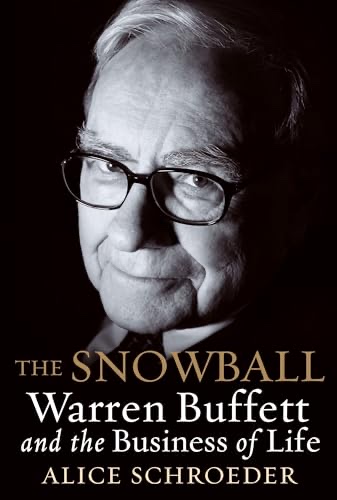
Buffett's governing image is that wealth, reputation and knowledge grow like a snowball rolled downhill: the result depends less on the size of the start than on finding 'wet snow' (something that reliably accumulates) and a 'really long hill' (enough uninterrupted time). The mechanism is that gains attach to prior gains, so starting early, never interrupting the roll and avoiding big losses matter more than any single brilliant move.
A person can judge their conduct either by an inner scorecard (whether they meet their own standards) or by an outer scorecard (how others see them). Buffett, following his father Howard, treated the inner scorecard as primary: he asked whether he would rather be the world's greatest lover but known as the worst, or the worst lover but known as the greatest. Seeing people through this lens shows who can hold a contrarian position under social pressure and who cannot.
In 1977 Susan Buffett moved from Omaha to San Francisco to pursue her own life and singing, but she did not divorce Warren. She arranged for Astrid Menks to look after him, and Astrid moved into the Omaha house. The three kept this openly acknowledged arrangement for decades, sending cards signed jointly. Warren married Astrid only in 2006, two years after Susie died. The case shows a man of great financial self-sufficiency who was emotionally dependent on women to manage his daily life.
Buffett first practised Graham's 'cigar butt' method: buy statistically cheap, often mediocre companies with one last free puff left in them, then sell. Under Charlie Munger's influence, and proven by Berkshire paying three times book value for See's Candies in 1972, he shifted to buying wonderful businesses at fair prices. Such businesses have pricing power and can compound capital internally for decades, while cheap bad businesses need constant reinvestment and must be sold before they decay.