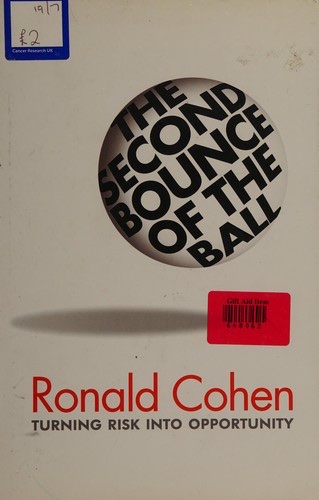
Cover of The Second Bounce of the Ball

The Second Bounce of the Ball

Ronald Cohen, Terry Ilott

7 ideas

  1. The Second Bounce of the Ball

    Entrepreneurial advantage comes from anticipating where the ball will land on its second bounce, not its first — seeing the secondary consequences and downstream opportunities others miss while they focus on the obvious immediate move. The first bounce is predictable and crowded; the value lives in correctly reading the less visible trajectory that follows.

  2. Uncertainty Rewards Those Who Act

    Risk and uncertainty are not obstacles to be eliminated but the very conditions under which outsized returns become possible, because they deter most competitors. The willingness to commit capital and effort amid ambiguity — rather than waiting for certainty that never arrives — is what separates successful entrepreneurs and investors from the cautious majority.

  3. Backing People Over Plans

    When evaluating early-stage ventures, prioritize the character, resilience, and adaptability of the founding team above the specifics of the business plan, since plans inevitably change while the people executing them must navigate the unforeseen. Judge how a person responds to setbacks and whether they have the drive to persist, because the original idea rarely survives contact with reality.

  4. Building Apax From Nothing

    Cohen recounts founding a pioneering venture capital firm in Britain when the asset class barely existed there, having to create both the deals and the market's understanding of equity investing simultaneously. The account shows that establishing a new category requires educating capital sources, regulators, and entrepreneurs at once, not merely finding good investments within an existing system.

  5. Investment committees judge the jockey first

    An investment committee should treat the entrepreneur and team as the main variable, because business plans and market forecasts will change while character and execution ability persist. The committee asks whether the team can adapt when the plan fails, whether its members are candid about risk, and whether the opportunity is large enough that success pays for the losses elsewhere in the portfolio. Risk is weighed against the whole portfolio rather than the single deal: a committee that refuses every deal that might fail will also miss the outsized winners that drive venture returns.

  6. Egyptian refugee builds Europe's Apax

    Cohen's family left Egypt for Britain in 1957 after the Suez crisis and arrived with little. He studied at Oxford and Harvard Business School, then in 1972 co-founded the firm that became Apax Partners, when venture capital barely existed in Britain. He also spent years lobbying for the tax and market reforms the industry needed, and his path from outsider to builder of a new European asset class is the case the book rests on.

  7. Venture capital needs deliberately built public infrastructure

    Cohen argues that entrepreneurial capital does not arise on its own. It needs an ecosystem that policy shapes: capital gains tax that rewards long-term risk, pension rules that allow institutions to invest in private equity, and growth-stock markets where investors can exit. When Europe lacked these, it lacked venture capital, and changing them was a precondition for the industry's growth.

Save and mark ideas in the app