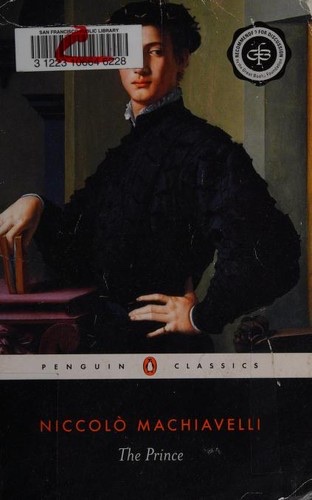
Cover of The Prince

The Prince

Niccolo Machiavelli

7 ideas

  1. Better Feared Than Loved

    Since love is held by a bond of obligation that people break whenever it serves their interest, while fear is maintained by dread of punishment that never fails, a ruler who must choose should prefer to be feared. The key constraint is to be feared without being hated, which requires abstaining from the property and women of subjects.

  2. Effective Truth Over Imagined Ideals

    Govern according to how people actually behave rather than how they ought to behave, because someone who acts well in every respect among many who do not will be destroyed. A leader must learn how not to be good and use that knowledge selectively according to necessity.

  3. Cruelty Done All At Once

    Injuries should be inflicted all at once so their bitterness is tasted less and resented less, while benefits should be given little by little so they are savored more. Leaders ruined by cruelty are those whose harsh acts increase over time rather than diminish.

  4. Cesare Borgia and Remirro de Orco

    Borgia installed the harsh Remirro de Orco to pacify a disordered region through cruelty, then, once order was restored, had him cut in two and displayed in the public square to redirect the people's resentment away from himself. This shows a ruler delegating brutality to a subordinate and then sacrificing that subordinate to claim the cleansing while escaping the blame.

  5. The Lion and the Fox

    A leader must combine the force of the lion to frighten wolves with the cunning of the fox to recognize traps, because either alone is insufficient. Since men are wicked and will not keep their word to you, you are not bound to keep yours to them, but you must be a great pretender who conceals this nature behind appearances.

  6. Fortune as river, prudence as dikes

    Fortune governs roughly half of human affairs and leaves the other half to human agency, like a flooding river that cannot be stopped once it rises. A prudent ruler builds dikes and embankments during calm weather, so that when the flood comes its force is channeled or blunted. Ruin falls hardest where no preparation was made in quiet times, not where fortune is strongest.

  7. Success requires matching method to the times

    Rulers succeed when their fixed style of acting (cautious or impetuous) happens to suit the circumstances, and fail when times change but their temperament does not. Because people rarely change their nature, the same method brings triumph in one period and ruin in the next. Machiavelli adds that boldness generally fares better than caution, since fortune yields more readily to those who seize it.

Save and mark ideas in the app