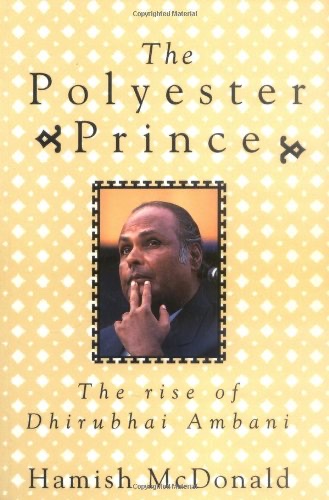
Cover of The polyester prince

The polyester prince

Hamish McDonald

8 ideas

  1. From gas-station clerk to industrial empire

    Dhirubhai Ambani rose from a Gujarati schoolteacher's son and Aden petrol-pump attendant to build Reliance into India's largest private polyester and petrochemicals conglomerate. His arc embodies self-made ambition in a post-colonial economy hostile to private scale.

  2. Mastering the License Raj

    In India's heavily regulated economy, Ambani won by manipulating import licenses, tariff structures, and industrial permits better than rivals. McDonald argues Reliance's edge lay in bending policy and bureaucracy, turning regulation itself into a competitive weapon.

  3. Political influence as core strategy

    The book portrays cultivated relationships across governments, media, and bureaucrats as central to Reliance's ascent, allegedly shaping policy to favor the company. Crony ties and information networks are shown as inseparable from the firm's commercial success.

  4. Financial innovation and the small shareholder

    Ambani pioneered mass equity ownership in India, drawing hundreds of thousands of ordinary investors into Reliance shares and creating a loyal shareholder army. This democratized capital raising while binding public sentiment to the company's fortunes.

  5. The operator is produced by the system

    The book reads Ambani neither as a hero entrepreneur nor as a villain. It treats him as the rational product of a regime in which state discretion over quotas and licences was the scarcest resource. On this view, the moral question moves from the individual to the design of rules that reward mastering bureaucracy over mastering markets.

  6. Exporting rayon at a loss for nylon

    In the 1960s India restricted nylon imports but granted import entitlements, called replenishment licences, to exporters of synthetic textiles. The profit came from the licence, not the cloth.

  7. Policy intelligence as a production input

    Where tariffs, excise classifications, and licences decide margins, knowing what a ministry will do before it acts is worth more than manufacturing efficiency. Reliance invested in contacts across officialdom and the press so it could anticipate or influence duty changes, product reclassifications, and licence approvals. That timing let it position capacity and stock ahead of rivals.

  8. Mass retail shareholders as a political shield

    Reliance's 1977 public issue and later issues drew very large numbers of small investors, many of them first-time buyers of equity. That base turned the company's share price into a matter of public and political concern, which raised the cost for any government or rival that wanted to act against it. Holding shares widely worked as a defence as well as a way to raise capital.

Save and mark ideas in the app