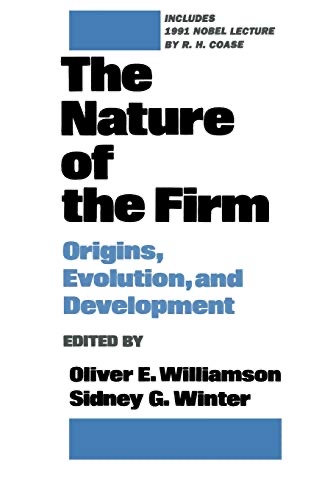
Cover of The Nature of the firm

The Nature of the firm

4 ideas

Buy on Amazon

A retrospective volume built on Coase's 1937 argument that firms exist to economize on transaction costs. Later contributors, such as Williamson, extend it into a theory of governance and institutions.

  1. Firms exist to economize on transaction costs

    Coase's core thesis is that firms arise when using the price mechanism, finding prices, negotiating, and contracting, costs more than organizing internally. The firm substitutes managerial direction for market exchange.

  2. The boundary of the firm

    A firm expands until the cost of organizing one more transaction internally equals the cost of doing it through the market. This margin sets the firm's size.

  3. Transaction cost economics extends Coase

    Contributors like Williamson develop asset specificity, bounded rationality, and opportunism to predict when transactions are internalized. Governance structure is chosen to minimize transaction costs.

  4. Institutions as responses to friction

    The volume reads firms, contracts, and law as arrangements that reduce the frictions of exchange. Economic organization is explained by its cost-saving function.

Save ideas and give them a thumbs up or down in the app