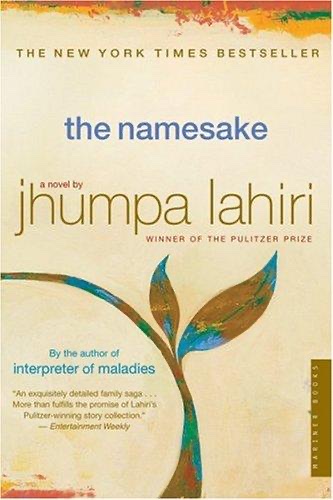
Cover of The Namesake

The Namesake

Jhumpa Lahiri

6 ideas

  1. Assimilation Is Not Symmetrical Across Generations

    The immigrant generation guards a home culture as the real self and treats the new country as performance, while the children invert this — experiencing the host culture as native and the parents' culture as the costume. This asymmetry means parent and child are never homesick for the same place, producing a grief that cannot be shared because each side is exiled from the other's normal.

  2. Identity as Two Names for Two Worlds

    The practice of holding a 'good name' for public life and a 'pet name' for intimate life externalizes the split self into language, so that a person literally answers to different identities depending on who is speaking. Viewing a life through which name is being used reveals which world the person is standing in and which self is being addressed at that moment.

  3. Rejecting an inheritance while its meaning stays hidden

    Gogol hates his name because it seems arbitrary and embarrassing. The name actually records the moment his father survived the train crash, which his father calls being given a second life. Because Ashoke keeps that story to himself until Gogol is an adult, the son's rebellion is aimed at a meaning he cannot see. Children of immigrants often reject parental choices that look meaningless only because the history behind them was never told.

  4. Gogol Ganguli's accidental placeholder name

    In 1968 Ashoke and Ashima Ganguli, Bengali immigrants in Cambridge, Massachusetts, cannot leave the hospital without naming their son, and the letter from Ashima's grandmother carrying his real name never arrives. Ashoke writes 'Gogol' on the form as a temporary pet name, after the Russian writer whose book he was reading when he survived a train wreck in India. The placeholder becomes permanent, and the son legally changes it to Nikhil at eighteen without ever learning the story behind it.

  5. Bengali split between pet name and good name

    Bengali custom gives each child a daknam, a pet name used only by family at home, and a bhalonam, a good name used in public and in official records. In India the two coexist because each belongs to a separate sphere.

  6. Identity formed by cycling through adopted worlds

    Gogol builds himself largely through the families and partners he attaches to, such as the wealthy, easy Manhattan household of his girlfriend Maxine and later his marriage to fellow Bengali-American Moushumi. Each attachment is partly an escape from, or a return to, his parents' world rather than a fixed self. Seen this way, belonging for the second generation is a series of tried-on homes. After his father dies, Gogol reclaims his own name and heritage by choice rather than by default.

Save and mark ideas in the app