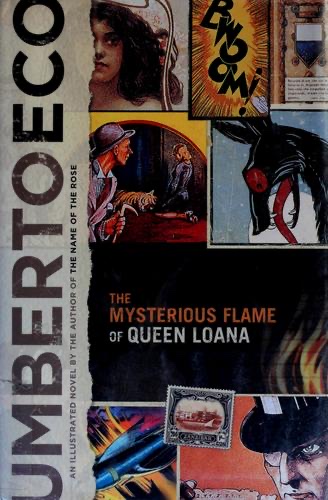
Cover of The Mysterious Flame of Queen Loana

The Mysterious Flame of Queen Loana

Umberto Eco

5 ideas

  1. Paper Memory Versus Lived Memory

    A person can lose autobiographical memory while retaining 'paper memory' — everything ever read, memorized, or absorbed from books, songs, and comics. This reveals that identity is split between semantic knowledge (facts and culture you can recite) and episodic knowledge (the personal experiences that make those facts yours), and the former survives without the latter.

  2. Popular Ephemera As Identity Archive

    Reconstructing a self can be done not through profound documents but through comic strips, pop songs, advertisements, and pulp magazines absorbed in childhood. The discarded junk of mass culture functions as the deepest sediment of who someone is, because it shaped the emotional and imaginative frame before any sophisticated thought arrived.

  3. Emotion Recognized Without Its Source

    A vivid feeling can surge up attached to a phrase, image, or object whose origin is completely forgotten — the 'mysterious flame' of recognition without retrieval. This shows that affect is stored separately from the narrative explanation of it, so we can be moved by things we can no longer account for.

  4. Identity Rebuilt By Cultural Excavation

    When personal memory fails, a self can be reassembled methodically by returning to the physical sites and artifacts that formed it and reading them in sequence, treating one's own past as an archaeological dig. The method assumes that immersion in the original stimuli can trigger the buried experiences they were once paired with.

  5. Yambo's Amnesia and the Solara Attic

    Giambattista 'Yambo' Bodoni, a sixty-year-old antiquarian book dealer in Milan, wakes from a stroke in 1991 remembering every book he ever read but not his wife Paola, his daughters, or his own life. He retreats alone to his family's country house at Solara in Piedmont and spends months in the attic and chapel reading the comics, schoolbooks, records and wartime newspapers of his 1930s–40s Fascist-era childhood. A second stroke brings back his memories, and they converge on Lila Saba, the girl he loved as a teenager, whose face he still cannot see before the book ends.

Save and mark ideas in the app