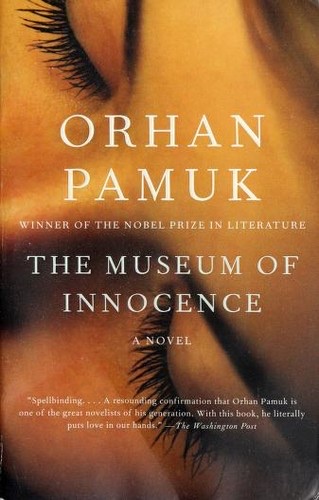
Cover of The Museum of Innocence

The Museum of Innocence

Orhan Pamuk

6 ideas

  1. Love Sustained by Deprivation and Pursuit

    Obsessive love is intensified not by possession but by the inability to possess; the years spent visiting a beloved without consummation generate a richer attachment than the brief period of fulfillment. Longing structured around routine proximity to an unreachable person becomes a self-sustaining way of life.

  2. The Museum as Anti-Narrative Archive

    Rather than narrate a love story chronologically, one can preserve it as an arrangement of accumulated objects in physical space, letting visitors reconstruct meaning by moving among artifacts. This converts private emotion into a public, walkable archive where the sequence of feeling is encoded in things rather than sentences.

  3. Kemal's Eight Years at Füsun's Table

    In 1975 Istanbul, Kemal Basmacı, a wealthy Nişantaşı businessman engaged to Sibel, begins a secret affair with Füsun, an eighteen-year-old shopgirl and poor distant cousin, in his family's Merhamet Apartment, but she vanishes after his lavish engagement party at the Hilton. He breaks off the engagement and, after finding her married to the aspiring filmmaker Feridun, dines with her family in their Çukurcuma home for nearly eight years, secretly pocketing her things, including 4,213 of her cigarette butts. When she divorces and finally agrees to marry him in 1984, Füsun dies in a car crash, and Kemal buys the Keskin house to turn it into a museum of her belongings, dictating his story to the writer 'Orhan Pamuk.'
  4. Objects as vessels of lost time

    Kemal claims that an object a beloved touched keeps the moment it was touched, so holding the object brings back the feeling of that moment. Collecting such objects becomes a way to deal with grief: the collector turns an unbearable absence into something physical that he can arrange, count, and visit. The book then builds a real museum to test this claim about its own objects.

  5. Happiness is recognized only in retrospect

    The novel opens with Kemal saying that the afternoon with Füsun was 'the happiest moment of my life' and that he did not know it at the time. The claim is that people cannot register peak happiness while living it. It becomes happiness only later, through loss and memory, and this delay is what drives the need to preserve and revisit it.

  6. Class and virginity as social currency

    The novel shows 1970s Istanbul's Westernizing bourgeoisie claiming to be modern while still judging women by premarital virginity. That standard has little effect on the rich man but costs a poorer woman her marriage prospects and her standing. Kemal's romance cannot be separated from these class and gender rules: Füsun pays most of the social price for an affair that he can afford to have.

Save and mark ideas in the app